
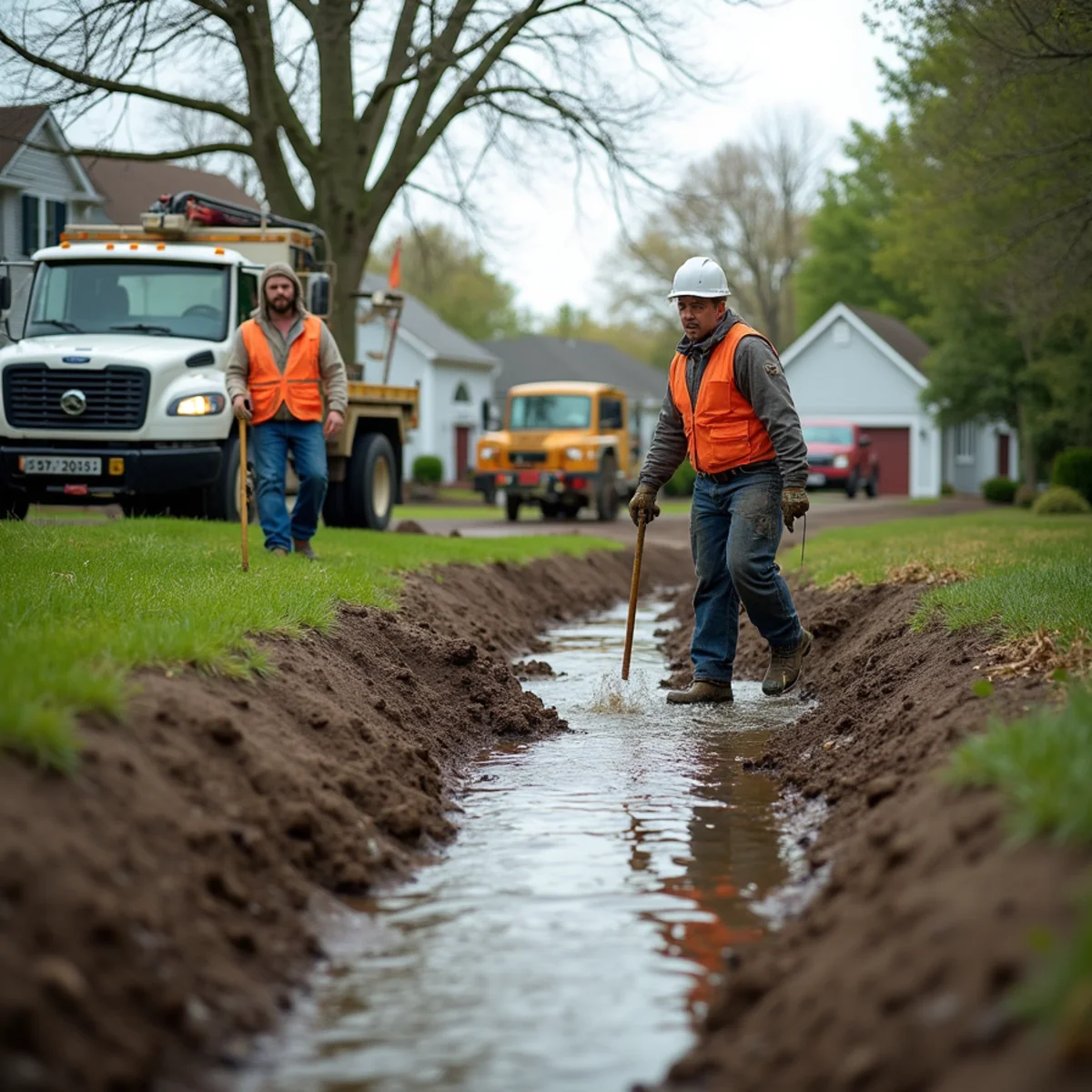
When water is pooling against your foundation or turning the yard into a swamp, every hour counts. Galan's Landscaping responds fast to emergency drainage problems across Hamilton and Butler County — diverting active water away from your home and getting to the source before it causes basement seepage or foundation damage.
Southwest Ohio's heavy clay soil is the culprit behind most of these emergencies. Clay barely absorbs water, so a hard rain runs across the surface and collects in the lowest spot — often right against the house. We stop the immediate threat, then fix the underlying grading and drainage so it doesn't happen with the next storm.
Drainage emergencies we handle
- Water pooling against the foundation and seeping toward the basement
- A yard that floods and stays saturated for days after rain
- Downspouts dumping water right at the house instead of away from it
- Eroding channels and washouts cutting across the lawn
- A clogged or collapsed existing drain backing water up
What's Included
Rapid water tracing
We trace where the water is coming from and where it collects, and identify the fastest safe way to move it away from the house — the step that determines everything that follows.
Immediate diversion & pumping
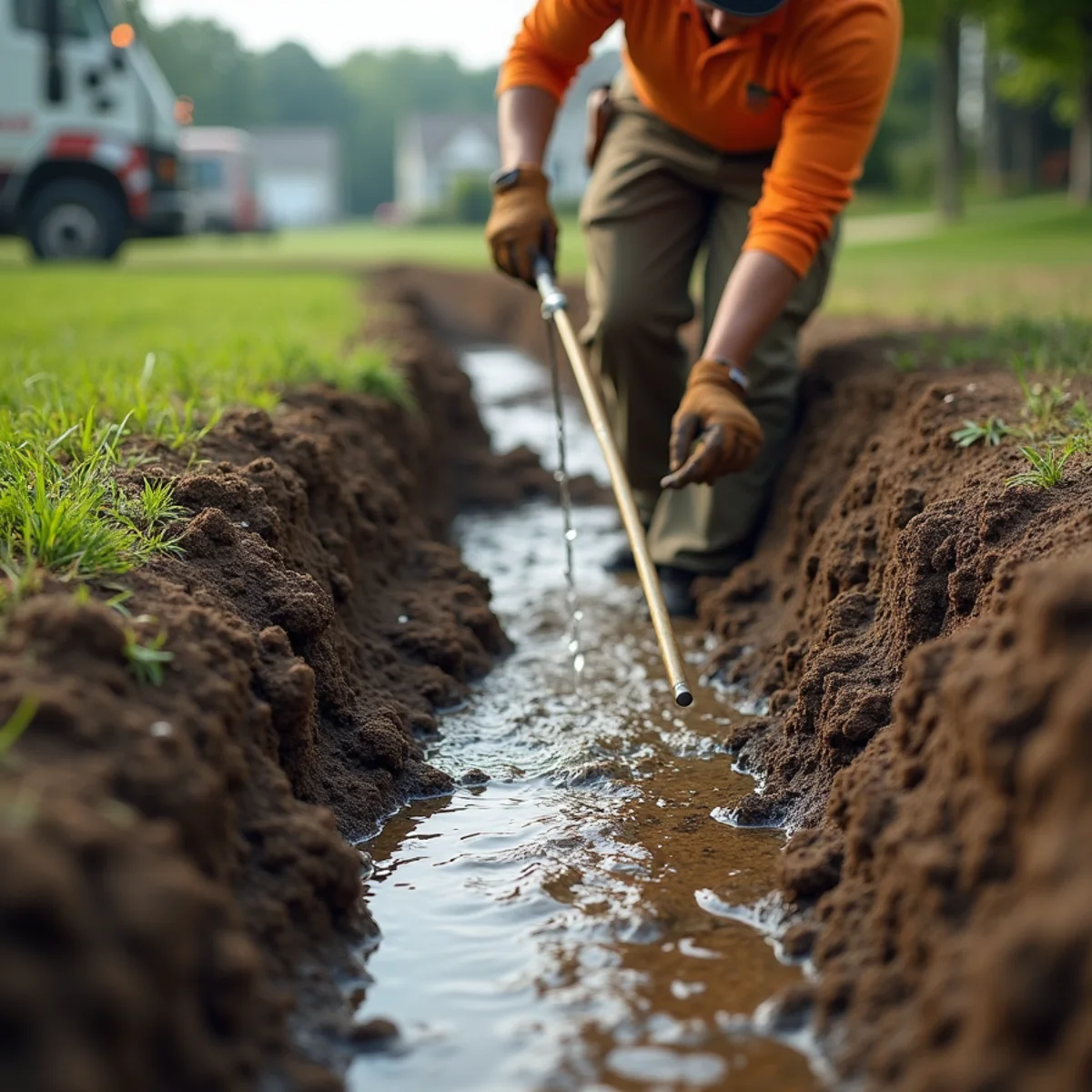
We cut emergency channels, extend downspouts to daylight, and pump or redirect standing water off the foundation right away to take the pressure off before damage sets in.
Downspout redirection
Downspouts dumping at the foundation are extended or rerouted so roof water lands well away from the house rather than pooling against the wall.
Grade correction
We regrade problem areas that pitch water back toward the house, restoring positive fall away from the foundation as part of the permanent fix.
Engineered permanent system
Once the emergency is handled, we design and install the right lasting solution — French drain, catch basins, swale, or dry well — sized to the water your lot actually sheds.
Surface restoration
We restore the lawn or hardscape over the work with sod or seed so the yard looks untouched once the system is in and the flooding is solved.
How we stop the flooding
- 1
Rapid assessment
We trace where the water is coming from and where it's collecting, and identify the fastest safe way to get it moving away from the house.
- 2
Immediate diversion
We cut emergency channels, extend downspouts, and pump or redirect standing water away from your foundation right away.
- 3
Source correction
We regrade problem areas and design the right permanent fix — French drain, catch basin, or swale — to carry water to a safe outlet.
- 4
Permanent solution
We install the drainage system and restore the surface so the yard stays dry through future storms.
From emergency to permanent fix
The first job is to protect your home. Standing water against a foundation finds its way into basements and crawlspaces and, over time, undermines footings. We get active water moving immediately — extending downspouts to daylight, cutting temporary channels, and pumping out low spots so the pressure comes off your foundation.
But a diversion is a band-aid if the underlying grade sends water back. Once the emergency is handled, we trace the real cause — usually negative grade toward the house, downspouts discharging too close, or clay with nowhere to drain — and design a permanent solution. That might be regrading, a French drain, a catch-basin network, or a dry-well outlet, sized to the water your lot actually handles.
Because we do both the emergency response and the permanent drainage work, there's no handoff and no finger-pointing. The same crew that stops tonight's flooding designs and installs the system that keeps it from happening again.
Speed genuinely matters when water is at the foundation. Saturated clay against the wall builds hydrostatic pressure that pushes moisture through any crack or cold joint, and given enough hours it works into basements and crawlspaces and undermines footings. Every hour we can get water moving away lowers that pressure, which is why our first moves on-site are the fast ones — extending downspouts to daylight, cutting temporary channels, and pumping standing water off the low corner.
The Great Miami valley and our flat, clay-bottomed lots mean water often has nowhere obvious to go, and that shapes the emergency response. There is frequently no natural fall to daylight, so the temporary diversion has to buy time until we can engineer a real path — sometimes a dry well that lets water soak away below grade, sometimes a longer run to a low point on the property. We read the grade in the rain, when the water shows us exactly where it wants to travel.
We are careful about where diverted water ends up, because a fix that floods your neighbor is not a fix. Ohio drainage is bound by rules about discharging onto adjacent property, so we route emergency and permanent flows to a legal, safe outlet on your own lot or an approved connection. Getting that right in the moment saves a dispute later and keeps the permanent system we install fully above board.
A wet basement and a wet yard are usually the same problem seen from two sides, and treating only one rarely holds. If water is pooling against the foundation outside, no amount of interior sealing keeps it out for long — the fix is to stop the water reaching the wall in the first place. We focus on the exterior grade, downspouts, and drainage that control where water goes, which is the durable side of the equation. For interior waterproofing or a failing sump we will point you to the right specialist and coordinate so the two solutions actually work together.
We are also honest about what an emergency visit can and cannot achieve in the moment. Diverting active water and pumping a flooded low spot are fast; excavating a full drainage system in saturated clay during a downpour is neither safe nor good work. So the emergency call stabilizes the situation and protects the house, and the permanent excavation follows once the ground firms up enough to trench, compact, and restore it properly. Rushing the permanent work into a mud pit only guarantees we are back to redo it.
Why choose Galan's Landscaping
- Fast response to protect your foundation before damage sets in
- One crew for emergency diversion and the permanent drainage fix
- Solutions engineered for Southwest Ohio's clay soil
- Grading, French drains, catch basins, and downspout burial in-house
What affects emergency drainage cost
Emergency drainage is quoted on-site once we've traced the water. Cost depends on:
- Severity and how much active water has to be diverted or pumped
- The permanent fix required — regrading, French drain, catch basins, dry well
- Length of drain run and distance to a safe outlet
- Soil conditions, excavation depth, and access for equipment
- Surface restoration — sod, seed, or hardscape repair after the work
Where We Provide Emergency Drainage
When heavy rain overwhelms a yard, we respond fast to protect foundations across the region — the flat, clay-bottomed lots of Hamilton and Fairfield, low-lying spots near the Great Miami, and newer grades around West Chester and Middletown that were never cut to drain. Emergency diversion and permanent drainage design cover the whole of Butler County from one crew.
We're based on Innovation Pl in Hamilton and cover all of Butler County — including Fairfield, West Chester, Middletown, and Oxford — plus Warren County and the Greater Cincinnati area. See every community we serve on our service areas page, or call (323) 606-0255 to confirm we cover your address.
Need Emergency Drainage in Hamilton or Butler County?
Locally owned in Hamilton and trusted across Butler County. Same-day emergency dispatch and honest, itemized quotes — call Galan's Landscaping today.
Emergency Drainage: Frequently Asked Questions
Get the water moving away from the house immediately: clear debris from downspout outlets, extend or redirect downspouts away from the foundation, and keep the area around it clear. Then call (323) 606-0255 — the longer water sits against the foundation, the higher the risk of seepage and structural damage.