
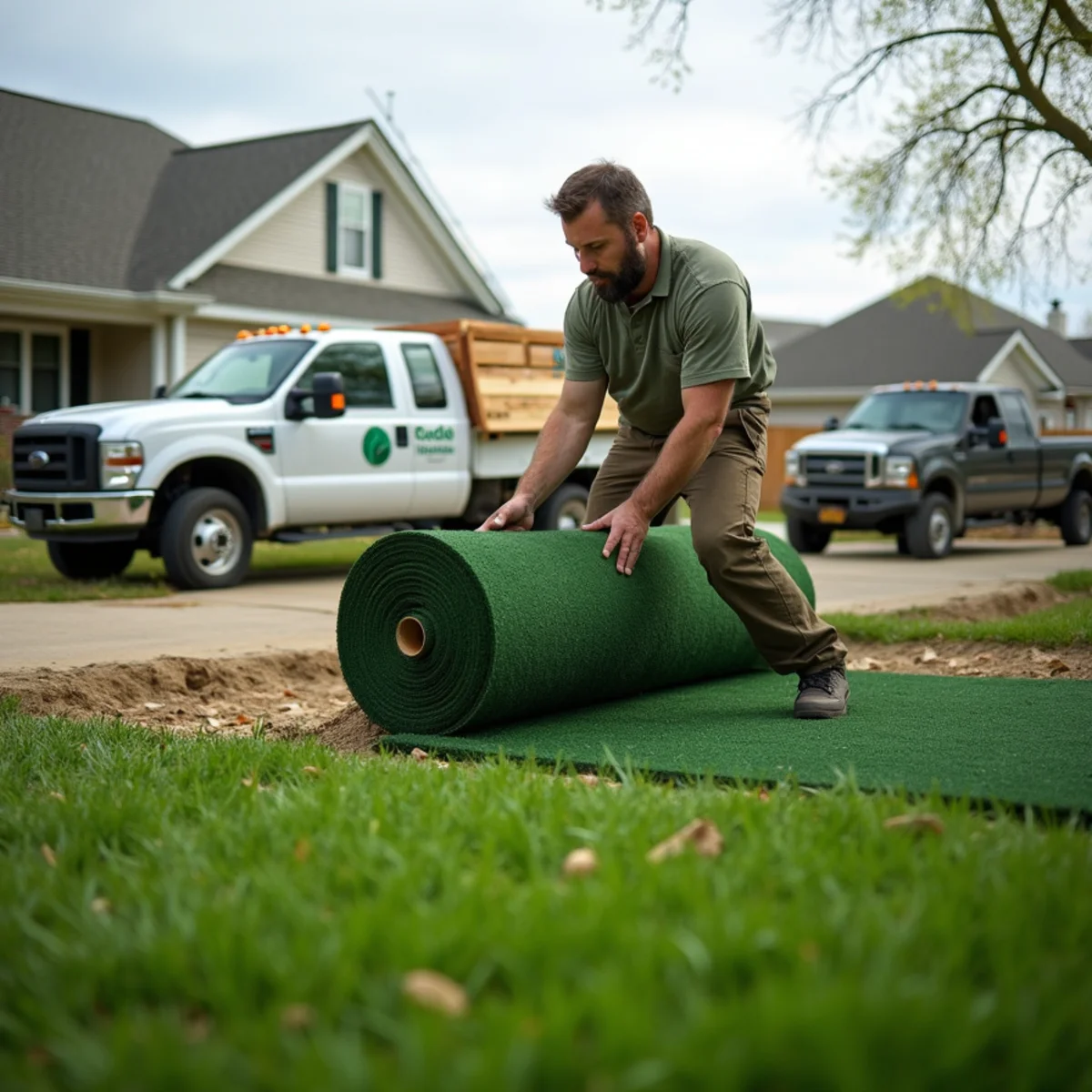
When you want a lawn now — not after two seasons of seeding and waiting — sod is the answer. Galan's Landscaping installs premium Kentucky bluegrass and turf-type tall fescue sod across Hamilton and Butler County, over properly graded and prepped soil so it roots fast and lasts.
Sod is the fastest way to turn bare dirt, a failed lawn, or a new-construction lot into a thick, green, weed-free yard. But it only takes if the ground under it is right — which is why we spend the effort on grading, soil prep, and drainage before the first roll goes down.
When sod is the right call
- A bare or dirt lot after new construction or a big project
- A thin, weedy, patchy lawn that's past the point of overseeding
- Erosion on slopes that need instant cover to hold soil
- Wanting a lawn established now instead of waiting on seed
- Dog runs, high-traffic areas, and spots seed never fills in
What's Included
Old turf & debris removal
We strip out the failed lawn, roots, and debris rather than laying over it, because sod only takes when its new roots reach clean, prepared soil.
Grade correction for drainage
We correct the grade so water drains away from the house, fixing the drainage first when a soggy bed would otherwise rot the new sod.
Soil amendment & smoothing
We amend and loosen our heavy clay so roots can penetrate, then rake the bed smooth for full sod-to-soil contact with no bridging gaps.
Premium sod blends
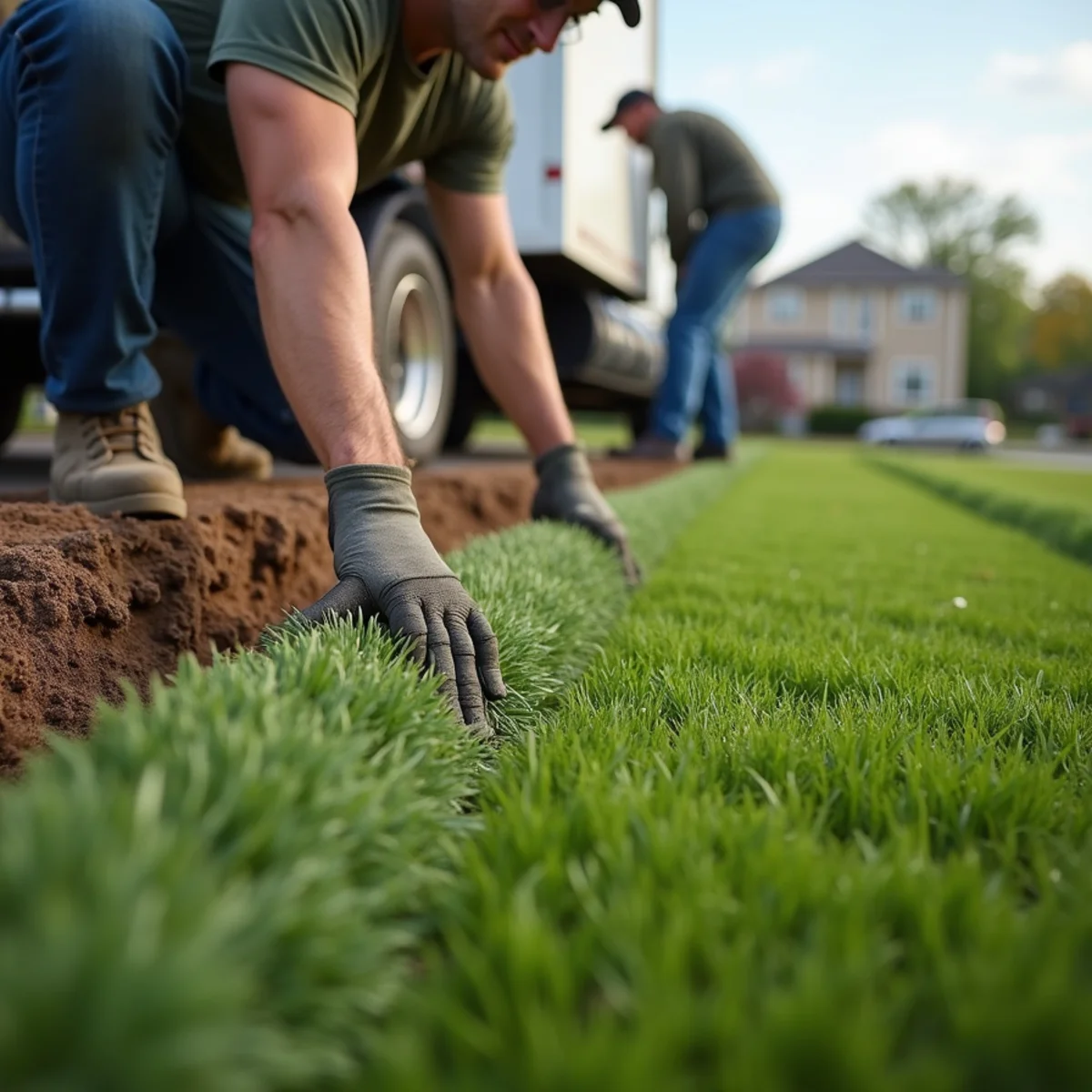
Fresh-cut Kentucky bluegrass and turf-type tall fescue blends, matched to your sun, shade, and clay, are laid in a tight, staggered pattern with clean seams.
Rolled for firm contact
The installed sod is rolled to press it firmly into the prepared soil, eliminating air pockets and speeding rooting through those critical first weeks.
Water-in & care plan
We water the sod in on completion and hand you a specific watering and mowing schedule for the rooting period, so establishment does not come down to guesswork.
Our sod installation process
- 1
Grade & soil prep
We remove old turf and debris, correct the grade for drainage away from the house, and prepare a clean, loose soil bed.
- 2
Amend & smooth
We amend and level the soil so roots can penetrate our heavy clay, then smooth it for full sod-to-soil contact.
- 3
Lay fresh sod
We install fresh-cut sod in a tight, staggered pattern with clean seams, rolled for firm contact with the soil.
- 4
Water-in & care plan
We water it in and give you a clear watering and mowing schedule for the critical first weeks of rooting.
The right blend, prepped the right way
Grass selection matters in Southwest Ohio. Kentucky bluegrass gives that classic, dense, self-repairing lawn and loves full sun; turf-type tall fescue is more heat- and drought-tolerant and handles our clay and partial shade better. Most of the best lawns here use a blend, and we'll recommend the right mix for your sun, soil, and how you use the yard.
But even perfect sod fails over bad prep. Our clay is unforgiving — lay sod on unamended, compacted ground and the roots never penetrate. So we grade for proper drainage, break up and amend the soil, and create the loose, level bed sod needs to knit in. Fixing drainage before sodding is often part of the job, because a soggy lawn will rot new sod.
The first few weeks decide whether sod thrives, so we don't just drop it and leave. You get a clear watering schedule, guidance on the first mow, and honest advice on timing — sod installs best in spring and fall, and we'll tell you if it's smarter to wait rather than fight summer heat or frozen ground.
The soil-to-sod contact is what makes new turf root, and it is where our clay works against us. Sod laid on lumpy, cloddy, or crusted ground bridges over the gaps and dries out before the roots ever reach into the soil. We break up and rake the bed smooth, roll the sod after laying to press it firmly into the surface, and stagger the seams like brickwork so there are no continuous joints for roots to dry along or weeds to exploit.
Watering is the single biggest factor in whether new sod takes, and most failures are watering failures. For the first week or two the sod needs to stay consistently moist all the way through to the soil beneath — that usually means watering daily, sometimes twice on hot days — then we taper to deeper, less frequent watering that pulls roots downward. We hand you a specific schedule rather than a vague instruction, because guesswork here is expensive.
Sod is not always the right answer, and we will say so. For a large, healthy-enough lawn that is merely thin, overseeding costs a fraction of sod and can restore it over a season. Sod earns its premium when you need instant cover — a bare new-construction lot, erosion on a slope that has to be held now, a dog run seed never fills, or a lawn too far gone to rescue. We help you weigh instant results against cost honestly.
New-construction lots are a special case, and they are where sod most often earns its cost. Builders typically leave behind compacted subsoil, buried construction debris, and a thin scatter of topsoil that will not grow a decent lawn no matter what you seed into it. We assess what is actually under the surface, bring in and grade quality topsoil where it is short, and correct the drainage the grading crew ignored, so the sod roots into something that will support a lawn long-term rather than sitting on hardpan and struggling from day one.
Establishment does not end when the sod knits down, and the first season's care sets the lawn up for years. The first mow should wait until the roots have anchored and then take only a little off the top with a sharp blade; the first fertilization and any weed control are timed so they help rather than stress the young turf. We give clients a simple month-by-month plan for that first year, and many roll straight onto our mowing and turf program so the lawn we installed is maintained by the crew that knows exactly how it was built.
Why choose Galan's Landscaping
- Premium Kentucky bluegrass and fescue blends for Ohio
- Real grading and soil prep — not sod dropped on bad ground
- Drainage corrected before sod goes down when needed
- A clear care plan for the critical rooting weeks
What affects sod installation cost
Sod projects are quoted by area after we assess the site. Cost depends on:
- Square footage of sod and the grass blend selected
- Grade correction and how much old turf and debris must be removed
- Soil amendment and any drainage work required first
- Site access and whether it's flat or sloped terrain
- Watering setup and any follow-up care included
Where We Provide Sod Installation
We install premium sod over properly graded, prepped soil across the region — new-construction lots around West Chester and Liberty Township, failed or thin lawns in Hamilton and Fairfield, and erosion-prone slopes out toward Oxford and Middletown. Every install includes the grading and soil prep our Butler County clay demands, plus a clear care plan for the weeks that decide whether new turf roots and lasts.
We're based on Innovation Pl in Hamilton and cover all of Butler County — including Fairfield, West Chester, Middletown, and Oxford — plus Warren County and the Greater Cincinnati area. See every community we serve on our service areas page, or call (323) 606-0255 to confirm we cover your address.
Need Sod Installation in Hamilton or Butler County?
Locally owned in Hamilton and trusted across Butler County. Same-day emergency dispatch and honest, itemized quotes — call Galan's Landscaping today.
Sod Installation: Frequently Asked Questions
For our climate and clay, a blend of Kentucky bluegrass and turf-type tall fescue usually performs best — bluegrass for density and self-repair in sun, fescue for heat and drought tolerance and better shade performance. We match the blend to your specific sun and soil. Our blog compares them in detail.