
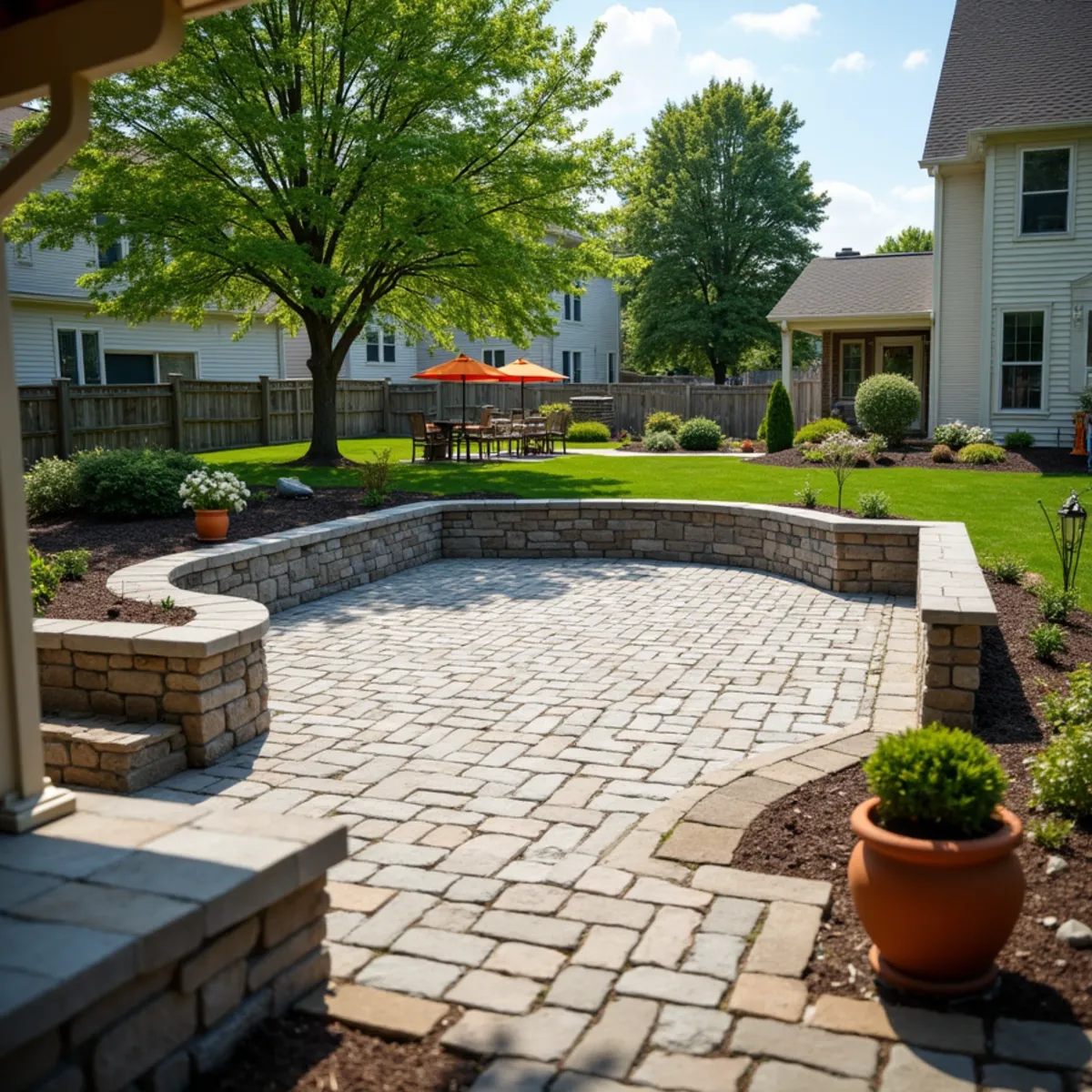
A patio is only as good as what's under it. Galan's Landscaping builds paver patios, walkways, and outdoor living spaces across Hamilton and Butler County on a compacted aggregate base engineered for our heavy clay and hard freeze-thaw cycles. Done right, a paver surface stays flat, sheds water, and looks new for decades.
We install clay brick, concrete pavers, permeable systems, and natural flagstone — matched to your home's architecture and the way you actually want to use the space. Whether it's a simple front walk, a dining patio off the kitchen, or a full backyard retreat with a seating wall and fire feature, we design and build it in-house.
Why so many Ohio patios fail
- Pavers set on sand or dirt with no compacted base — they sink and heave
- Standing water and ice because the surface was never pitched to drain
- Weeds and ants in joints that were never stabilized with polymeric sand
- Edges spreading apart because no edge restraint was installed
- Settling and lippage from clay that wasn't excavated deep enough
What's Included
On-site design & layout
We stake out the shape, size, and paver pattern on your actual yard, confirm how the space flows to your doors, and set the grades and drainage before any digging starts.
Excavation & haul-off
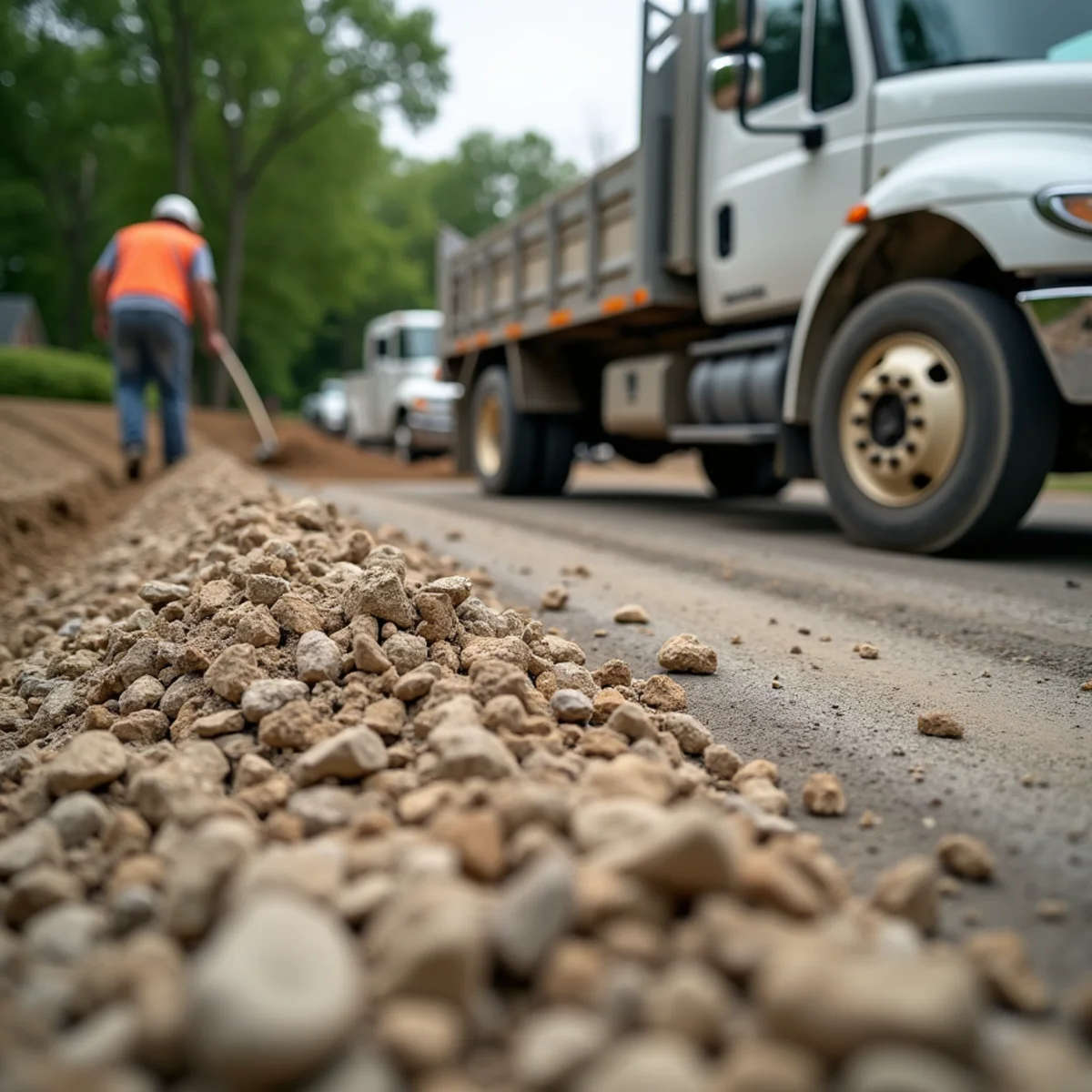
Unstable clay is dug out to the depth the design requires and hauled away, not spread around the yard, so the patio sits on a foundation built for its load rather than on soil that moves.
Compacted aggregate base
An open-graded base is built and compacted in lifts — the single most important step for a surface that stays flat through freeze-thaw — then topped with a screeded bedding layer.
Precision paver setting
Pavers are laid to pattern with clean saw cuts around curves, steps, and features, and pitched to carry water away from the house rather than toward it.
Edge restraint & jointing
Locked-in edge restraint stops the field from spreading, and polymeric jointing sand is swept, cleaned off the faces, and activated to block weeds, ants, and washout.
Final compaction & cleanup
A final compaction pass seats every paver, and we clean the surface and surrounding area so the patio is ready to use the day we leave.
How we build a patio that lasts
- 1
Design & layout
We plan the shape, size, paver style, and how the space flows to your home, then stake it out and confirm grades and drainage.
- 2
Excavation & base
We dig out unstable clay and build a compacted, open-graded aggregate base — the single most important step for a surface that won't move.
- 3
Setting bed & pavers
A screeded bedding layer, precise paver placement, clean cuts around curves and features, and a pitch that carries water away from the house.
- 4
Edge restraint & jointing
Locked-in edge restraint and polymeric jointing sand to stop spreading, weeds, and washout, followed by a final compaction pass.
Materials, drainage, and detail work
The base is where we spend our time. In Butler County's clay, we over-excavate and build a thick, well-compacted aggregate base in lifts so the patio has a stable, free-draining foundation. Water that can't escape is what freezes, expands, and lifts pavers — so drainage is designed into every project from the grading up.
For material, concrete pavers give you the widest range of colors, textures, and price points and are extremely durable; natural flagstone brings a timeless, organic look; permeable pavers let stormwater filter through and can help with lot drainage and coverage limits. We'll walk you through the trade-offs and show you what fits your budget and your home.
The details are what separate a patio that looks custom from one that looks like a kit. Clean radius cuts, a soldier-course border, integrated steps and seating walls, and a finished transition to your lawn or beds all get planned before the first paver goes down.
Compaction is not a single step but a discipline we repeat throughout the build. We compact the subgrade, then build the base in thin lifts and compact each one, because a base packed all at once only firms up on top and leaves voids below that later telegraph as dips. On patios that carry real weight, we also confirm the base is uniform edge to edge so no soft pocket becomes the low spot that collects water and heaves.
How we handle the base varies with your soil. Butler County's fat clay swells when wet and shrinks when dry, so on heavy sites we favor an open-graded aggregate base that drains freely and does not hold the moisture that freeze-thaw turns into lift. Where the grade allows, we pitch the finished surface a consistent quarter-inch or so per foot away from the house — enough to shed water without being noticeable underfoot.
Polymeric jointing sand is the finish that keeps a patio tight for years, but it has to be installed dry and activated correctly or it hazes the surface and fails early. We sweep it fully into the joints, clear every grain off the paver faces, and mist it in stages so it sets firm. Done right, it locks the field against spreading, blocks weeds, and resists the ants and washout that plague loose-sand joints.
Sealing a paver patio is optional, and we give straight advice rather than upselling it. A quality sealer deepens the color, makes the surface easier to clean, and helps lock the joint sand, but it has to be reapplied every few years and can trap moisture if it goes on over a damp base or too soon after install. For many homeowners a well-built, well-jointed patio needs no sealer at all; for others who want the richer wet look, it is worth the upkeep. We will tell you honestly which camp your project falls into.
Permeable paver systems deserve a closer look on lots with drainage or coverage concerns. Instead of shedding stormwater to the edges, they let it filter down through open joints and a special stone base into the ground, which can ease a wet yard and, in some jurisdictions, help with impervious-surface limits. They cost more and need periodic cleaning of the joints to keep draining, so they are not right for every project — but where drainage is already a headache, they solve two problems at once and are worth pricing out.
Why choose Galan's Landscaping
- Engineered aggregate bases built for Ohio freeze-thaw
- In-house design and build — one accountable crew
- Clean cuts, proper pitch, and locked edge restraint on every job
- Workmanship stands behind every patio we install
What drives paver patio cost
Every hardscape is quoted after a site visit. In our Southwest Ohio benchmark, a 300-square-foot paver patio typically runs in the $4,500–$9,000 range depending on:
- Square footage, shape complexity, and number of curves and cuts
- Paver material — standard concrete vs. premium or natural stone
- Excavation depth and how much clay has to be removed and hauled
- Drainage work, base depth, and site access for equipment
- Add-ons: seating walls, steps, fire features, lighting, and borders
Where We Provide Paver Patios & Walkways
We build paver patios and walkways on lots across the region, and our base approach shifts with the soil under each one — the heavy clay common in Hamilton and Fairfield, or the mixed grades on newer West Chester and Middletown builds. Whether it is a front walk or a full backyard living space, we bring the same engineered base to every Butler County project.
We're based on Innovation Pl in Hamilton and cover all of Butler County — including Fairfield, West Chester, Middletown, and Oxford — plus Warren County and the Greater Cincinnati area. See every community we serve on our service areas page, or call (323) 606-0255 to confirm we cover your address.
Need Paver Patios & Walkways in Hamilton or Butler County?
Locally owned in Hamilton and trusted across Butler County. Same-day emergency dispatch and honest, itemized quotes — call Galan's Landscaping today.
Paver Patios & Walkways: Frequently Asked Questions
Built on a proper compacted base with edge restraint and good drainage, a paver patio easily lasts 25+ years, and individual pavers can be lifted and reset if you ever need to. The failures you see around Hamilton almost always trace back to a skipped base or missing drainage — the exact steps we never cut.