How Much Does Paver Patio & Retaining Wall Installation Cost in Greater Cincinnati & Dayton?
Cost is the first question almost everyone asks about a paver patio or retaining wall, and it deserves an honest answer. No reputable contractor can quote your exact price from a blog post, because your site, size, and materials all move the number. What we can do is give you real regional ranges and explain what actually drives cost, so you can budget with confidence and spot a quote that is too good to be true.
Realistic ranges for our region
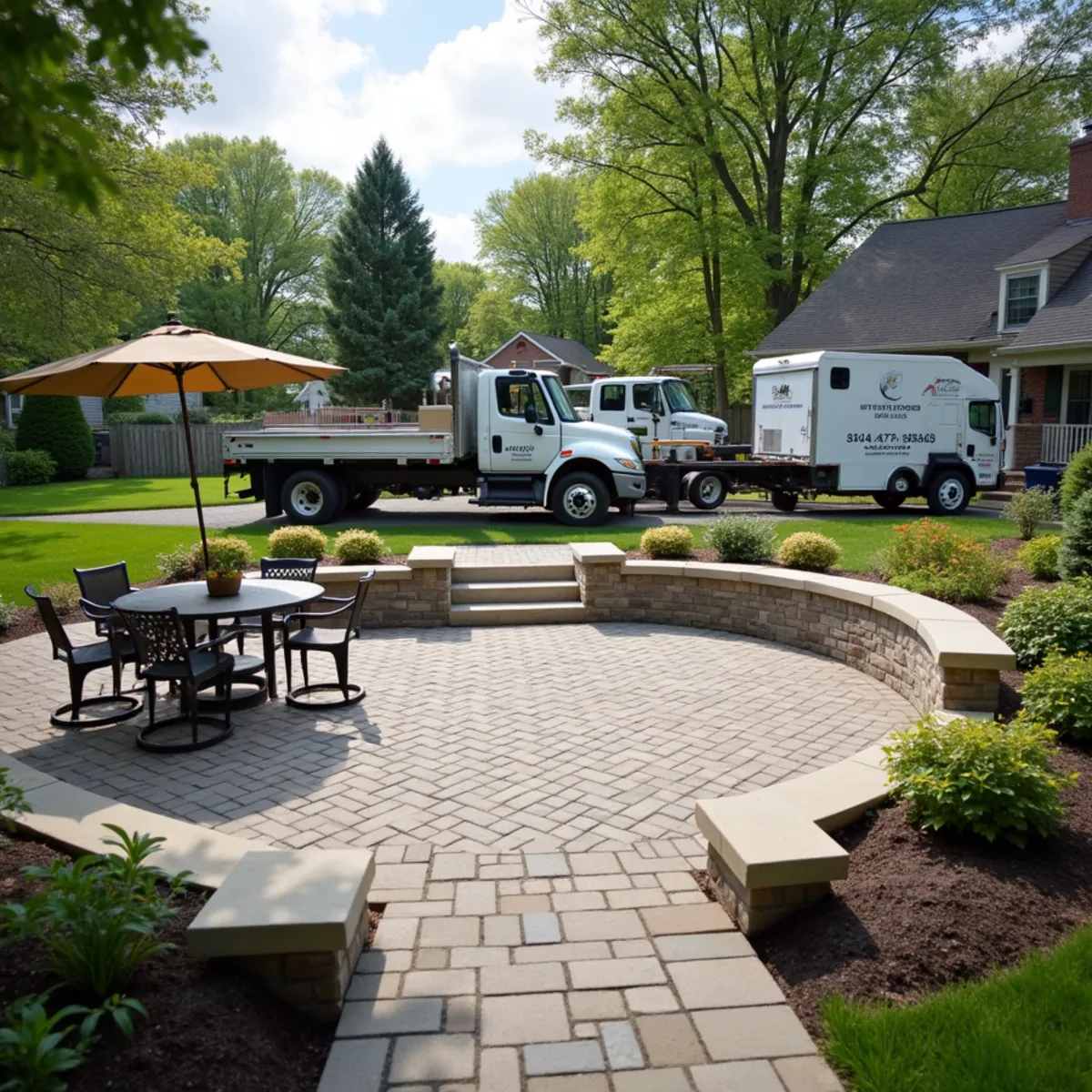
Across the Columbus and Southwest Ohio market, a typical 300-square-foot paver patio runs roughly $4,500 to $9,000 installed. That is a wide band on purpose, because the difference between the low and high end is almost entirely about base preparation, paver selection, and site conditions. A simple rectangular patio in standard concrete pavers on easy ground sits near the bottom; a patio with premium pavers, curves, borders, and a difficult site climbs toward the top.
What drives paver patio cost
- Base depth and prep. Our clay soil demands a properly compacted aggregate base. This is the invisible cost that separates a patio that lasts decades from one that fails fast.
- Paver selection. Standard concrete pavers cost far less than tumbled, large-format, or premium products. Material choice can swing the total dramatically.
- Size and layout. Curves, borders, multiple colors, and inlays add labor and cutting. A simple square is the most economical shape per square foot.
- Site access and conditions. Tight backyard access, slopes, and removing an old surface all add labor.
- Drainage needs. If the patio requires grading or drainage integration, that adds to the base scope.
Our paver patio and walkway installation always starts with the base, because in this climate that is what you are really paying for. The pavers you see are the easy part; the compacted aggregate you do not see is what keeps them flat through a decade of Ohio winters.
What drives retaining wall cost
Retaining walls are priced by the face square footage (height times length) and by how hard they have to work. A short garden wall that defines a bed is one thing; a taller structural wall holding back a slope is another entirely, and the cost reflects the engineering behind it.
- Height. Taller walls carry far more load and often require geogrid reinforcement, stepped bases, or engineering, all of which add cost per square foot.
- Drainage system. Gravel backfill, drainage pipe, and proper outlets are non-negotiable in our clay and are built into any wall that will last.
- Block type. Standard segmental block versus natural stone or premium architectural block is a significant price difference.
- Excavation and backfill. The amount of digging, base building, and engineered backfill behind the wall drives labor.
A wall taller than about three to four feet, or one holding a serious load, moves from a landscaping project into structural territory, and in many jurisdictions crosses a permitting threshold. Our retaining wall construction is built for the reality of Southwest Ohio soil, where drainage and base depth decide whether a wall stands for thirty years or leans in three.
Why the cheapest bid usually costs more
We have rebuilt many patios and walls in West Chester and across Greater Cincinnati that were installed on the cheap just a few years earlier. The pattern is always the same: a thin base, no drainage, and a low price. Freeze-thaw did the rest. Paying for the base and drainage the first time is far cheaper than paying for the tear-out and redo later.
Ways to control cost without cutting corners
If a full project stretches your budget, there are honest ways to bring the number down that do not sacrifice durability. Choosing a standard concrete paver over a premium tumbled product saves significantly while keeping the same bulletproof base underneath. Keeping the shape simple, a clean rectangle instead of sweeping curves and multiple borders, reduces cutting labor and waste. Phasing the work, building the patio this year and adding the seat wall or fire pit next season, spreads the investment while keeping one cohesive plan. What you never want to trim is base depth or drainage, because those are the parts that make everything above them last. Spending less on the pavers is a preference; spending less on the base is a future rebuild.
How to compare quotes fairly
- Ask what base depth and material each contractor is quoting, and get it in writing.
- Confirm the drainage plan for any wall or grade change.
- Compare the same paver and block products, not just the bottom-line number.
- Ask how they handle our freeze-thaw and clay, and listen for a specific answer.
What we look at before quoting your site
A number from a blog is a starting point; a real quote comes from the site. When we walk a paver or wall project, we check access first, because a backyard reachable only through a narrow gate means wheelbarrowing every ton of base by hand, which shows up in the labor line. We test the soil, note the slope and where water runs, and look for anything that has to be demolished. Those conditions, not the pavers themselves, are what move a bid.
We also ask what the space is really for. A patio meant to carry a dining set and a fire pit and outdoor gathering area needs different sizing and base detail than a simple sitting pad, and planning that up front avoids paying to rebuild later. An honest estimator would rather right-size the project now than sell you square footage you will not use.
Red flags in a suspiciously low bid
- A base depth under what our frost line demands, or none specified in writing.
- No mention of drainage behind a wall or under a patio.
- A price quoted before anyone has actually seen the site.
- Vague material specs that let cheaper products be substituted later.
Get an honest number for your project
The only way to know what your patio or wall will cost is to have someone walk your site, take measurements, and understand your goals. Call Galan's Landscaping at (323) 606-0255 for a straightforward estimate that spells out the base, the drainage, and the materials, so you know exactly what you are paying for and why it will last.
Frequently Asked Questions
In our region a 300-square-foot patio typically runs about $4,500 to $9,000 installed, depending mainly on base preparation, paver selection, and site conditions. A site visit gives you an exact number.