Zero-Tolerance Winter Ice Management for Commercial Retail and Medical Centers in SW Ohio
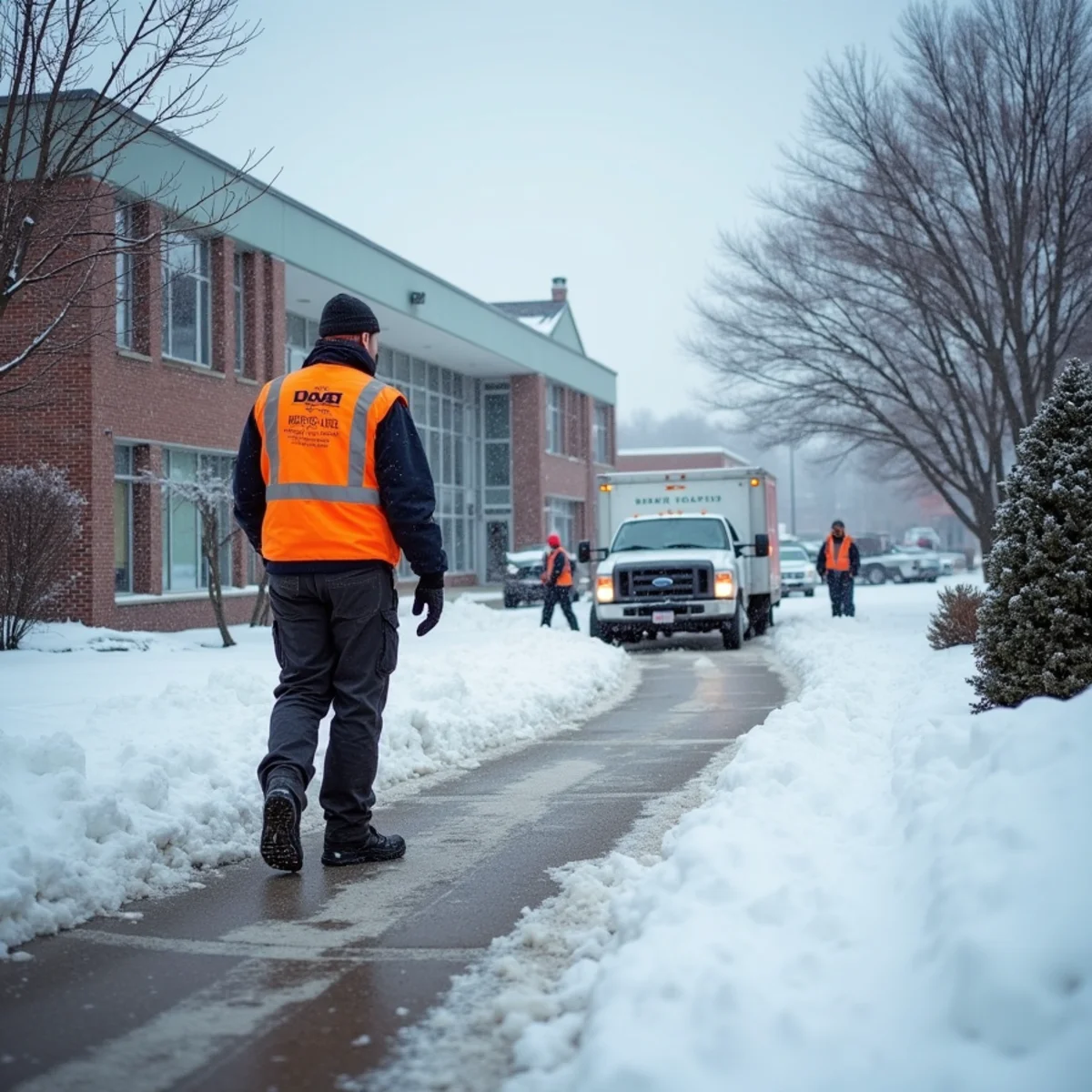
For most commercial properties, some snow on the lot for a few hours is a minor inconvenience. For a hospital, an urgent care, a pharmacy, or a busy retail center, a single patch of ice at the entrance is a genuine emergency, a fall risk for elderly and mobility-limited visitors, a liability claim, and a threat to people who may already be unwell. These properties cannot operate on a standard plowing schedule. They need zero-tolerance ice management, and it is a different discipline entirely.
What zero-tolerance actually means
A standard commercial contract might trigger service at two inches of snow. A zero-tolerance program has a completely different goal: keep the walking and driving surfaces safe and passable at all times, not just after accumulation. That means proactive treatment before storms, continuous monitoring during them, and re-treatment as refreeze sets in. The standard is not 'cleared after the storm,' it is 'safe throughout.'
The core protocols
- Pre-treatment. Applying deicer or brine before a storm prevents snow and ice from bonding to the pavement, so it can be cleared cleanly and stays safer throughout.
- Priority sequencing. Entrances, ADA access, drop-off zones, and pedestrian routes are treated first and monitored most closely.
- Continuous service during events. Crews stay ahead of accumulation rather than waiting for a trigger depth.
- Refreeze management. Overnight melt refreezes into black ice, so re-treatment as temperatures drop is built into the plan.
- Right material for the temperature. Deicer effectiveness changes with pavement temperature, and matching the product keeps surfaces safe without waste.
Pedestrian zones are the priority
On retail and medical properties, the highest-risk area is not the parking lot, it is the path from the car to the door. Walkways, crosswalks, entrances, and ADA ramps see the most foot traffic and the most vulnerable visitors. A zero-tolerance program treats these pedestrian zones as the top priority, often with dedicated crews and separate treatment from the vehicle areas. Our commercial snow plowing and salting is structured to keep these critical zones safe first and continuously.
Documentation is your legal protection
In a slip-and-fall lawsuit, the difference between a defensible position and a costly settlement often comes down to records. A zero-tolerance program logs everything: when crews arrived, what was treated, what material was used, and when each pass happened. This time-stamped documentation demonstrates that the property met its duty of care, and it is one of the most valuable things a high-liability property gets from a professional program. Vague, undocumented service leaves you exposed.
What the record should capture
- Arrival and departure times for every visit and monitoring pass.
- Areas plowed and areas treated with deicer.
- Material used and conditions at the time.
- Pre-treatment and refreeze treatments, not just the main clearing.
Snow storage and drainage are safety issues too
Where the plowed snow goes is a safety decision on a zero-tolerance property, not just a logistics one. Piling snow uphill of an entrance or across a drainage path guarantees that every sunny afternoon sends meltwater flowing over the walkways, where it refreezes into black ice after dark. On medical and retail sites, that turns a cleared property into a hazard overnight. A well-designed plan stages snow where its meltwater drains away from pedestrian routes and parking, and where the piles do not block sightlines at drive aisles and crosswalks. On tight urban lots with nowhere safe to stack it, hauling snow off-site is sometimes the only responsible option. Thinking through melt and refreeze in advance is exactly the kind of planning that separates a genuine safety program from a truck that simply pushes snow to the nearest edge.
Why a dedicated, local crew matters
Zero-tolerance service demands responsiveness and familiarity. A crew that already knows your site, where water drains and refreezes, where the ADA routes run, where snow can and cannot be stacked, keeps a property safer than one learning it in the dark during a storm. Pairing winter service with year-round commercial grounds maintenance gives you exactly that continuity, one accountable partner who knows your property in every season.
Serving high-liability properties across SW Ohio
We work with retail centers, medical facilities, and other high-traffic commercial properties from Hamilton up through the Dayton corridor, where winter can turn dangerous fast. These properties cannot afford to gamble on winter weather, and their programs are built accordingly.
The refreeze trap on medical and retail sites
The most dangerous moment on a zero-tolerance property is not during the storm, it is the clear, sunny afternoon after it. Snow piled uphill of an entrance melts, the water sheets across the walkway, and the temperature drops after dark into a sheet of black ice right where the most vulnerable visitors walk. A lot that looked spotless at closing becomes the highest-risk it has been all week by the morning open.
Beating the refreeze trap is a planning problem, not a reaction. It means staging snow where its meltwater drains away from pedestrian routes, monitoring pavement temperature into the evening, and re-treating before the water can freeze. Properties from Hamilton out to West Chester that anticipate this, rather than sending a truck after the fact, are the ones that stay genuinely safe.
Refreeze prevention checklist
- Stage snow piles downhill of entrances and drainage paths.
- Monitor pavement temperature into the evening, not just during the storm.
- Re-treat walkways and ADA routes before overnight refreeze.
- Haul snow off-site on tight lots with nowhere safe to stack it.
Build your winter safety plan before the first storm
If you manage a retail center, medical facility, or any property where an icy walkway is unacceptable, the time to plan is now, not during the first storm. Call Galan's Landscaping at (323) 606-0255 and we will design a zero-tolerance ice management program with the protocols and documentation to keep your visitors safe and your property protected all winter.
Frequently Asked Questions
A program designed to keep surfaces safe and passable at all times, not just cleared after a storm. It uses pre-treatment, continuous service during events, and refreeze management, essential for retail and medical properties.