How to Inspect Mature Ash, Oak, and Maple Trees for Emerald Ash Borer and Storm Weakness
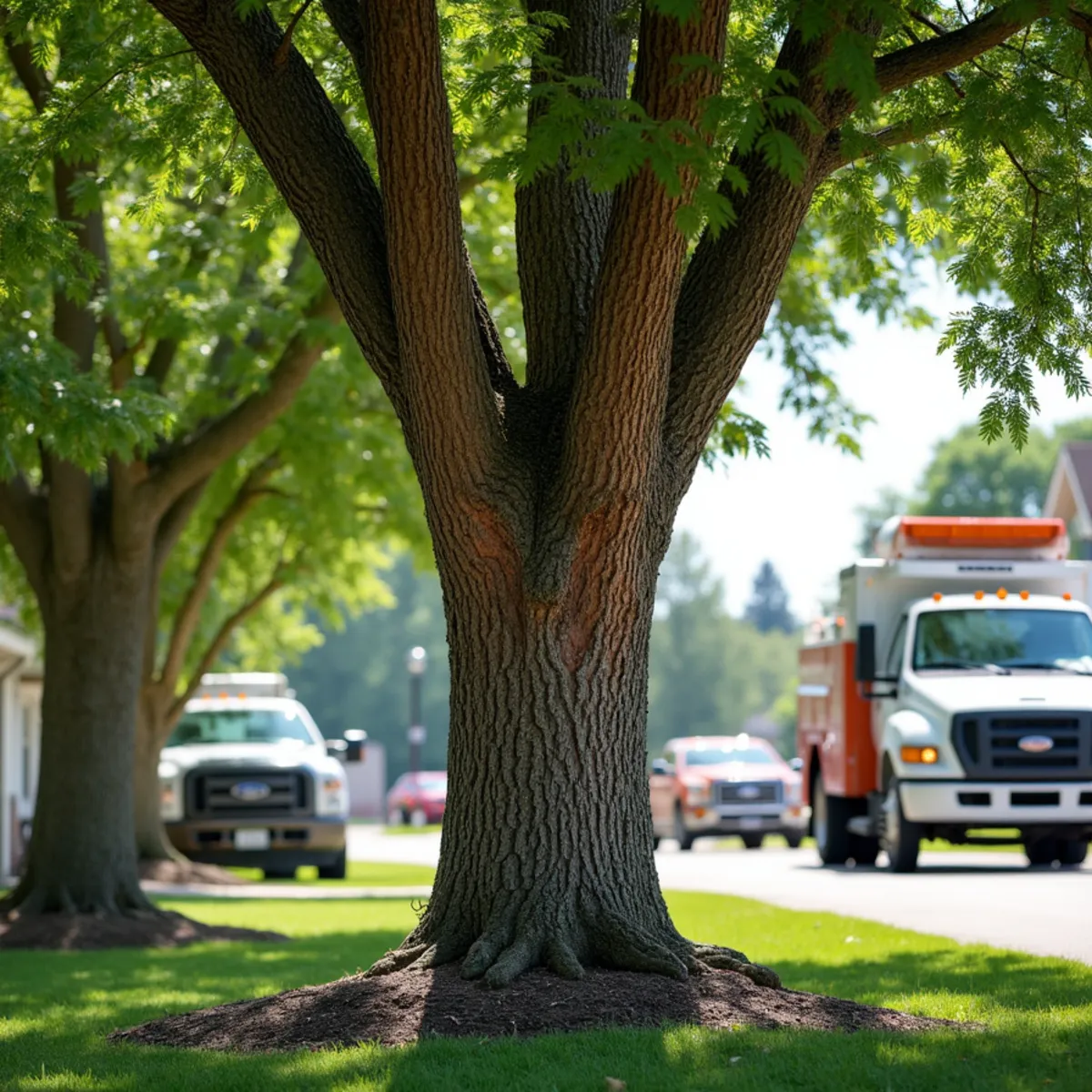
The mature trees that make our neighborhoods beautiful can also become the biggest hazard on your property. A large tree that fails in a storm can total a roof, crush a car, or worse. The good news is that most tree failures give warning signs months or years in advance, if you know what to look for. A twenty-minute walk around your trees, done a couple of times a year, can catch trouble long before a storm exposes it.
Emerald ash borer: the ash tree emergency
If you have an ash tree in Ohio, you need to take this seriously. The emerald ash borer, an invasive beetle, has devastated ash populations across the state, and an infested ash does not just die, it becomes dangerously brittle. Dead ash wood dries out and snaps unpredictably, which makes these trees especially hazardous to be around and to remove. The signs are distinctive.
- Canopy dieback starting at the top and working down.
- D-shaped exit holes in the bark, about an eighth of an inch across.
- S-shaped tunnels under the bark (visible where bark is peeling).
- Bark splitting and unusual woodpecker activity as they feed on the larvae.
- Epicormic sprouts, shoots growing directly from the trunk as the tree tries to survive.
Structural warning signs on any tree
Beyond insect damage, oaks, maples, and other mature trees develop structural defects that make them storm risks. Walk around each tree and look up and down the whole structure.
The trunk and base
- Cracks or seams running vertically up the trunk.
- Cavities, holes, or areas of soft, rotting wood.
- Mushrooms or fungal conks growing on the trunk or at the base, a strong sign of internal decay.
- Soil heaving or lifting on one side of the base, which can mean the roots are failing.
The branches and canopy
- Large dead branches (the classic 'widowmaker') hung in the canopy.
- Tight, V-shaped branch unions with included bark, which are weak and prone to splitting.
- A noticeable lean, especially a new or worsening one.
- Dead sections of canopy or leaves emerging late and sparse.
Roots and lean deserve special attention
Our saturated clay soil makes root problems especially dangerous. When the ground is waterlogged, a tree's anchoring roots lose their grip, which is why so many trees uproot entirely in our storms rather than snapping. A tree that has started to lean, or one with heaving soil on one side, may be in the early stages of uprooting. That is not something to watch, it is something to have assessed quickly through professional tree and branch removal before a saturated storm finishes the job.
When to call a professional
Some things you can monitor yourself, but certain findings warrant expert eyes right away: any ash showing borer signs, fungal conks, large trunk cavities, a new lean, or big dead limbs over a structure or where people gather. A trained assessment can often tell the difference between a defect that can be managed and one that means the tree has to come down.
Removing a large or compromised tree is genuinely dangerous work, especially a brittle ash or a leaning tree with a loaded root plate. This is not DIY territory, and homeowner chainsaw injuries spike whenever people take it on. If a storm has already caused damage, our emergency storm damage cleanup handles the aftermath safely.
How often to inspect, and after what
A good rhythm is to walk your trees twice a year, once in full leaf during summer, when a thin or dead section of canopy stands out clearly, and once with the leaves down in late fall, when the bare structure, cracks, and unions are easy to read. Beyond that schedule, always give your trees a look after any significant storm, since wind and ice open cracks and load limbs in ways that may not fail immediately but will in the next event. Pay special attention to the trees that matter most: the large ones within falling distance of your house, driveway, deck, or the neighbor's property. A tree in the back corner of the lot that can only fall into open lawn is a low priority; the big maple leaning over the bedroom is the one to watch closely.
A local problem across the region
Emerald ash borer and aging tree canopies affect every community we serve, from the older neighborhoods of Butler County to the wooded lots around Oxford. Regular inspection is the cheapest insurance there is against a catastrophic tree failure.
What a professional assessment sees that you cannot
A homeowner walk-around catches the obvious, a lean, a dead limb, conks at the base, and that is genuinely valuable. What a trained assessment adds is reading the tree as a system: whether a lean is old and stable or new and progressing, whether a co-dominant union with included bark is likely to split, and how the species and its defects interact. An ash with borer damage fails differently than a maple with a trunk cavity, and the response differs too.
The honest tradeoff is that not every defect means removal. A managed tree with a monitored crack may stand safely for years, while a brittle, borer-killed ash over a driveway should come down now. When a tree does fail, the ground damage and blocked access are handled through urgent debris and hazard removal, but the goal of inspection is to act before it ever comes to that.
Twice-a-year tree inspection routine
- In summer full leaf, scan for thin or dead canopy sections.
- In late fall bare structure, read cracks, cavities, and weak unions.
- After any major storm, recheck for new leans and loaded limbs.
- Prioritize large trees within falling distance of the house or drive.
Have a questionable tree assessed
If you have an ash tree, a leaning tree, dead limbs over your house, or any of the warning signs above, do not wait for a storm to make the decision for you. Call Galan's Landscaping at (323) 606-0255 and we will assess the tree honestly, whether it can be pruned and monitored or needs to come down, and handle any removal safely.
Frequently Asked Questions
Look for canopy dieback from the top down, D-shaped exit holes in the bark, S-shaped tunnels under peeling bark, and heavy woodpecker activity. An infested ash becomes brittle and should be removed promptly.