Navigating Southwest Ohio Soil Types: Glacial Till, Heavy Clay, and Alluvial River Silt
Every landscaping and hardscaping decision you make in Southwest Ohio is shaped by something you rarely think about: the soil under your feet. Our region's ground was written by glaciers and rivers, and the result is a patchwork of very different soils that each behave differently. Understanding what you are working with explains why your lawn browns, why your patio heaved, and why the same plant thrives on one lot and struggles a mile away.
Glacial till: the region's foundation
Much of Butler County and the surrounding area sits on glacial till, the unsorted mix of clay, silt, sand, and stone left behind when the glaciers retreated. Till is dense and often poorly draining, but it varies a lot from spot to spot because it was dumped, not sorted. You might hit a pocket of gravel in one hole and heavy clay three feet away. For building, that variability is exactly why base preparation and compaction matter so much, you cannot assume the ground is uniform.
Heavy clay: the one most yards fight
The soil most homeowners actually battle is heavy clay. It has tiny particles packed tightly together, which gives it two frustrating traits: it drains slowly and it holds water, then it swells when wet and shrinks when dry. In summer it can crack; in spring it stays soggy for days. Clay is why so many local yards struggle with drainage and why hardscaping here lives or dies by how it handles water.
- Drainage: clay sheds water on the surface instead of absorbing it, feeding runoff and soggy low spots.
- Heave: saturated clay expands when it freezes, pushing on walls, patios, and fence posts.
- Compaction: clay compacts hard, which chokes grass roots and makes planting difficult.
Alluvial silt: the river valley's gift and challenge
Along the Great Miami River and its tributaries, the soil changes character entirely. These alluvial soils were deposited by flowing water, so they are often richer, deeper, and better draining, prime ground for growing things. That is why the river valley has long been productive farmland. The trade-off is that low-lying river-valley lots can flood, and the soil profile can shift quickly from silt to clay as you move away from the water.
Why local soil knowledge changes the work
Knowing your soil is the difference between work that lasts and work that fails. It determines how we build a base, whether a lawn needs drainage before it needs seed, and which plants will actually thrive. Because our soils change so much across even short distances, from the till around Trenton to the varied ground across Butler County, reading the actual soil on your lot beats applying a generic plan every time.
For your lawn
Clay-heavy soil compacts and drains poorly, which stresses turf. Deep-rooted grass blends, core aeration to relieve compaction, and correcting drainage all help a lawn thrive on difficult ground. Our lawn and turf care works with your soil rather than against it, because a beautiful lawn on clay is absolutely achievable with the right approach.
For drainage
Slow-draining clay is the root of most yard water problems in our area. Whether the answer is regrading, burying downspouts, or installing a french drain, our french drain and downspout solutions are designed specifically for how our soils hold and move water.
For planting beds and hardscaping
Soil dictates plant choice as much as sunlight does. On heavy clay, plants that demand sharp drainage will sulk and rot, while species adapted to heavier, wetter ground thrive. Rather than trying to transform an entire yard's soil, the smarter approach is amending planting beds with compost to improve structure and choosing plants suited to the conditions you actually have. For hardscaping, soil is the reason base preparation cannot be shortcut here: a patio or wall is only as stable as the ground it sits on, and our variable, water-holding, frost-heaving soils demand deeper, better-compacted bases than a national spec assumes. Understanding what is under a project before it starts is what prevents the settling, heaving, and drainage failures that plague work built without regard for the ground.
How we test the soil before a project starts
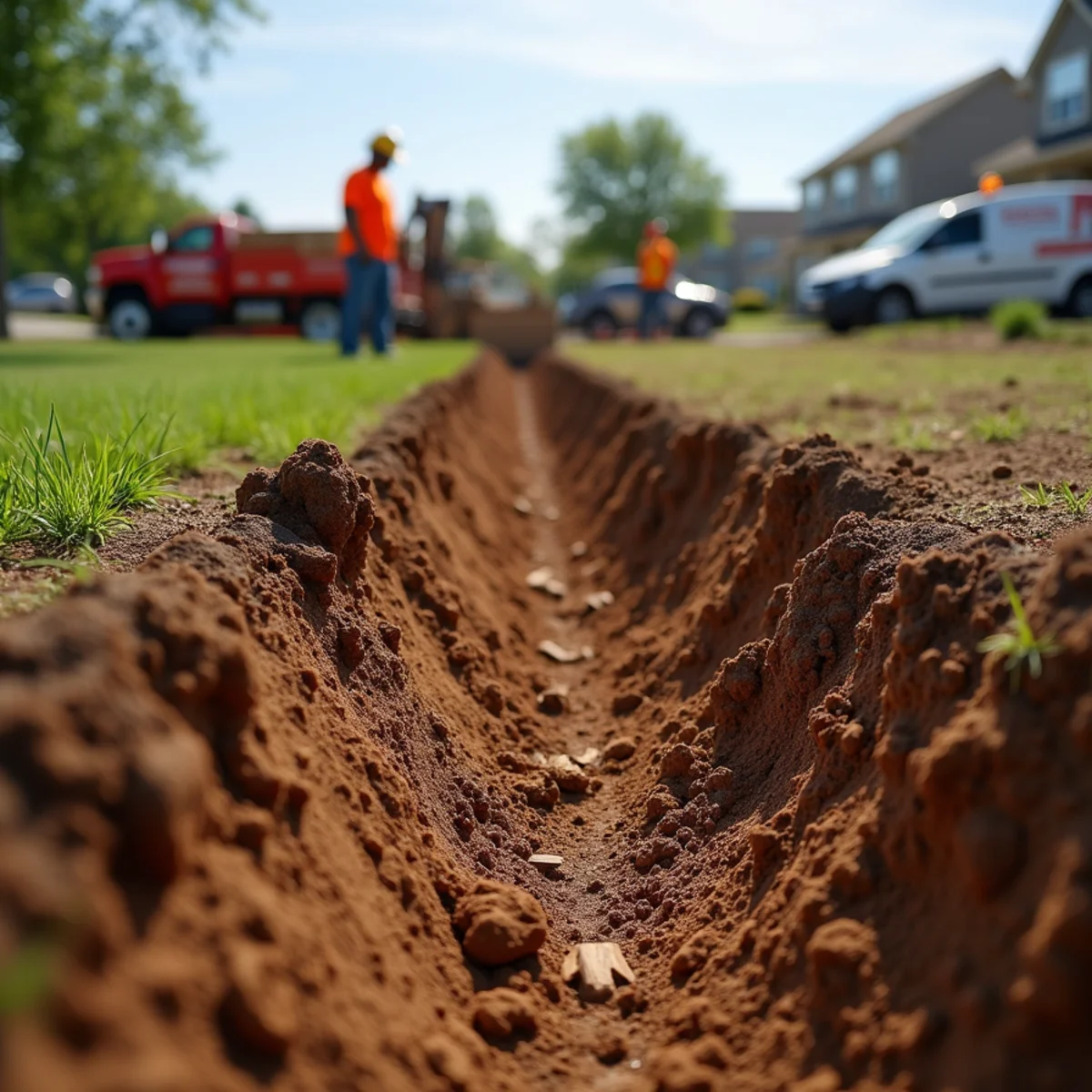
We do not assume the ground is uniform, because in glacial till it rarely is. Before a project, we dig test holes across the work area rather than trusting one spot, since a pocket of gravel in one corner and heavy clay ten feet away change how we build. We check how the soil ribbons between the fingers to gauge clay content, how fast a hole holds or sheds water, and how deep the topsoil runs before subsoil begins.
What we find dictates the plan. Heavy, water-holding clay under a hardscape means a deeper, better-compacted base and often integrated drainage; the same soil under a wall makes a full retaining wall drainage system non-negotiable. Reading the actual ground beats applying a national spec that assumes soil we simply do not have here.
How each soil type changes the approach
- Glacial till: variable, so test in several spots and compact carefully.
- Heavy clay: design for drainage and heave, and amend beds with compost.
- River silt: richer and better draining, but watch for flood-prone low ground.
- Any soil: base depth and compaction decide whether hardscape lasts.
Work with someone who knows the ground
You do not need a soil science degree to have a great yard, you need someone who has worked this ground for years and knows how it behaves through every season. If you are planning a project, fighting a wet lawn, or just want to understand why your yard does what it does, call Galan's Landscaping at (323) 606-0255. We will read the soil you actually have and build a plan that works with it.
Frequently Asked Questions
Much of our region sits on glacial till, an unsorted mix dumped by glaciers, so soil can vary from gravel to heavy clay within a few feet. That variability is exactly why base prep and drainage assessment matter.