Emergency Yard Flooding in Southwest Ohio: Protecting Basements from Heavy Clay Runoff
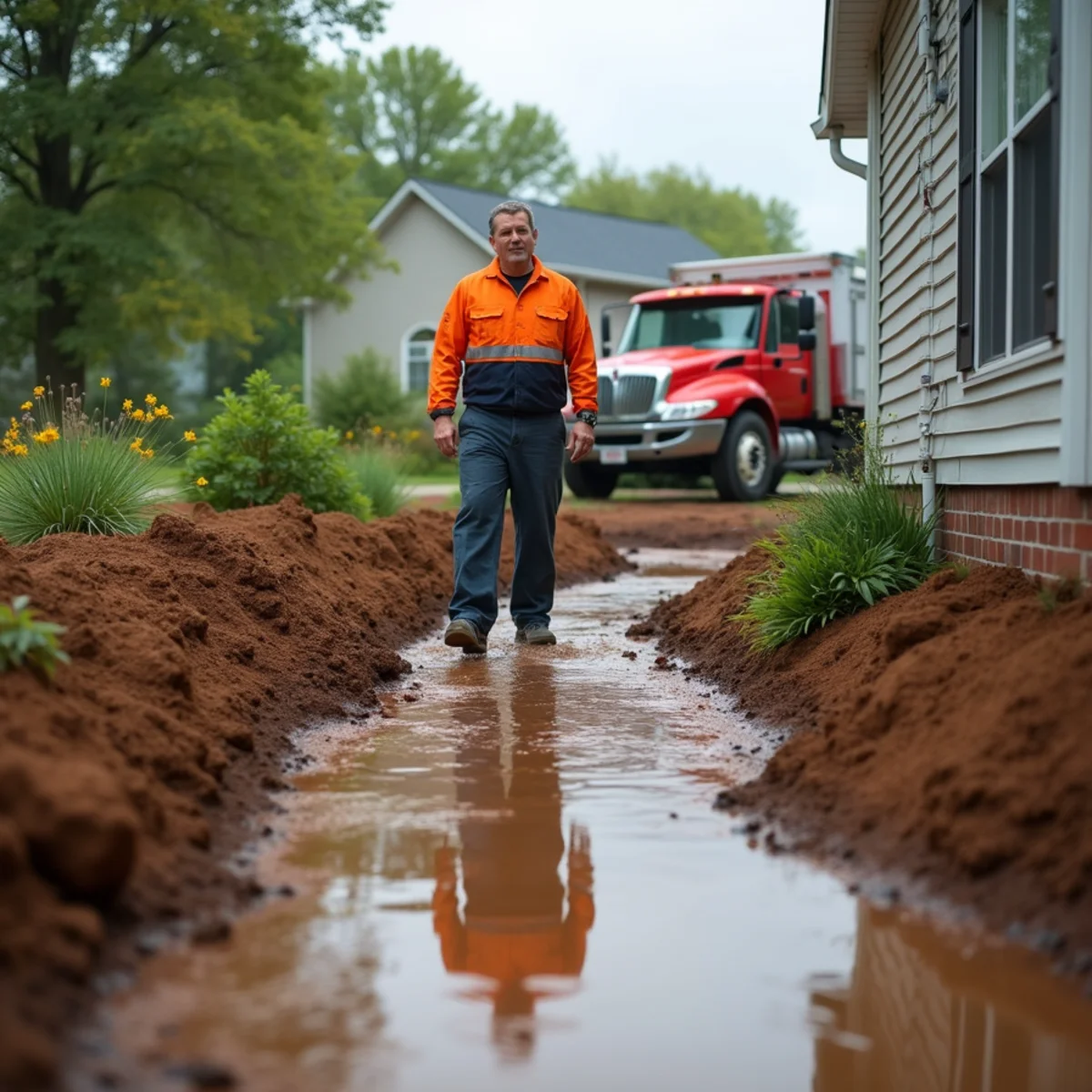
Southwest Ohio's heavy clay does not drain, it holds. When two or three inches of rain fall in an afternoon, that water cannot soak in fast enough, so it sheets across the surface and looks for the lowest point, which is very often the ground against your foundation. If you are watching a pond form in the backyard and worrying about your basement, here is what to do right now and how to keep it from repeating.
In the moment: get water moving away from the house
The immediate goal during an active flood is simple: keep water from pooling against the foundation, because standing water plus a hydrostatic head is what forces moisture through basement walls and floor seams.
- Clear your downspout outlets. Leaves and mulch clogging the discharge point send roof water straight down beside the foundation.
- Extend downspouts temporarily. Even a length of flexible pipe that carries water 6 to 10 feet out helps immediately.
- Clear any obvious surface blockages in swales or ditches so water can keep moving downhill.
- Move stored items off the basement floor and away from walls in case seepage starts.
Why clay soil makes our floods worse
In sandy soils, rain percolates down and away. Our regional clay, especially the dense till left across Butler County and the silty soils near the Great Miami River, has tiny pore spaces that fill quickly and then reject any more water. Once the top few inches are saturated, everything else runs off. That is why a yard that seems fine in a light rain becomes a lake in a real storm, and why grading and drainage matter far more here than in other parts of the country.
The fixes that actually stop repeat flooding
Bailing water and stacking sandbags is triage. Ending the cycle means giving water a designed path away from your home. After the storm passes, an assessment of your grading, downspouts, and low spots tells us which combination of solutions fits your lot.
Downspout burial and discharge
Roof water is the single biggest and easiest-to-control source. Burying downspouts into solid pipe that daylights well away from the house removes thousands of gallons from the foundation zone every year. This is often the first step in our french drain and downspout solutions, and on many lots it solves most of the problem by itself.
French drains for chronic saturation
Where the ground itself stays soggy, a properly built french drain, a perforated pipe set in washed gravel and wrapped in filter fabric, intercepts subsurface water and carries it to a lower outlet. The details matter enormously in clay: without filter fabric and the right stone, a french drain silts up and quits in a few seasons.
Regrading and swales
Sometimes the land simply slopes the wrong way. Re-establishing positive grade, a gentle fall away from the foundation for the first 10 feet, plus shallow swales to guide surface flow, redirects runoff before it ever reaches the house.
When it is an emergency, not a project
If water is actively entering your basement, or if a storm has washed out grading and left water pooling against the foundation, that is a same-day problem. Our emergency yard drainage service focuses on getting water moving away from the structure fast, then scheduling the permanent fix. Homeowners in Fairfield and across the region call us most after the big August downpours, when clay is already saturated from a wet summer.
- Repeated seepage after every heavy rain signals a drainage design problem, not just bad luck.
- Mulch or soil washing toward the house each storm shows water is running the wrong direction.
- A sump pump running constantly means groundwater needs an outlet before it reaches the pit.
The mistakes that make flooding worse
A few well-meaning fixes actually make clay-soil flooding worse, and we see them all the time. Piling mulch or topsoil against the foundation to "build up" a low spot traps water right where you least want it and can bridge over the top of a foundation wall. Splash blocks alone rarely move roof water far enough on a lot with any slope toward the house. And digging a low channel that simply relocates the water to a neighbor's yard invites a drainage dispute rather than solving anything. The durable answer is always the same idea: give the water a designed, continuous path to a spot where it can safely leave the property. Guessing at that path in the middle of a storm is how homeowners end up bailing the same corner year after year.
The mistake most homeowners make during a flood
The instinct during an active flood is to fight the water where it is pooling, bailing the corner, stacking bags, trenching a quick channel. The mistake is treating the symptom instead of the source. Nearly every basement we see take on water is fed by roof runoff and surface flow arriving at one low point at once. Chase the puddle and it returns next storm; redirect what feeds it and the puddle never forms in the first place.
The other common error is grading or building in a way that simply shoves water onto a neighbor or into a hillside that then slumps. Where a slope pitches runoff toward the house, a properly drained retaining wall with gravel backfill can hold the grade and carry water away at the same time. Solving drainage as one connected system, roof, surface, and subsurface, is what actually ends the cycle.
Emergency flood checklist for clay-soil yards
- Clear downspout outlets and extend them well past the foundation.
- Move stored items off the basement floor and away from walls.
- Keep water from ponding against the house with a temporary swale, not a trench aimed at a neighbor.
- Photograph high-water marks and any seepage for a later drainage assessment.
Get ahead of the next storm
Ohio's wettest stretches arrive fast, and clay soil does not forgive a bad slope. If your yard floods or your basement takes on water when it rains hard, do the immediate steps above, then call Galan's Landscaping at (323) 606-0255. We will assess your grading and drainage, handle the emergency, and design a permanent path that keeps water where it belongs.
Frequently Asked Questions
Small differences in grading, downspout discharge, and low spots decide where clay-soil runoff collects. A lot that slopes even slightly toward the house will pond water while a neighbor's sheds it away.