Fixing Chronic Muddy Lawns: French Drains and Downspout Burial for Ohio Homeowners
If you have a corner of the yard that stays squishy for days after a rain, a low spot that grows moss instead of grass, or ruts from the mower sinking into soft ground, you are dealing with one of the most common problems in Southwest Ohio: clay soil that will not drain. It is frustrating, it kills your grass, and it tracks mud into the house. The good news is that it is fixable, and the fixes are proven.
Why our lawns stay wet
The heavy clay under most yards in our region drains slowly by nature. Water that would soak away in sandier soil sits on top of clay or moves sideways just under the surface. Add the two biggest sources of concentrated water, your roof and the neighbor's runoff, and low spots turn into standing water that lingers for days. The grass roots suffocate, weeds and moss move in, and the whole area becomes unusable.
Start with the roof: downspout burial
Before digging up the yard, we look at where your roof water goes. A single downspout can dump hundreds of gallons in one storm right at the foundation or into a low spot. Burying downspouts into solid pipe that carries the water well away from the house, and away from the soggy area, often removes a huge share of the problem for a modest cost. It is the first thing we evaluate because it is frequently the highest-impact, lowest-cost fix.
French drains for chronic saturation
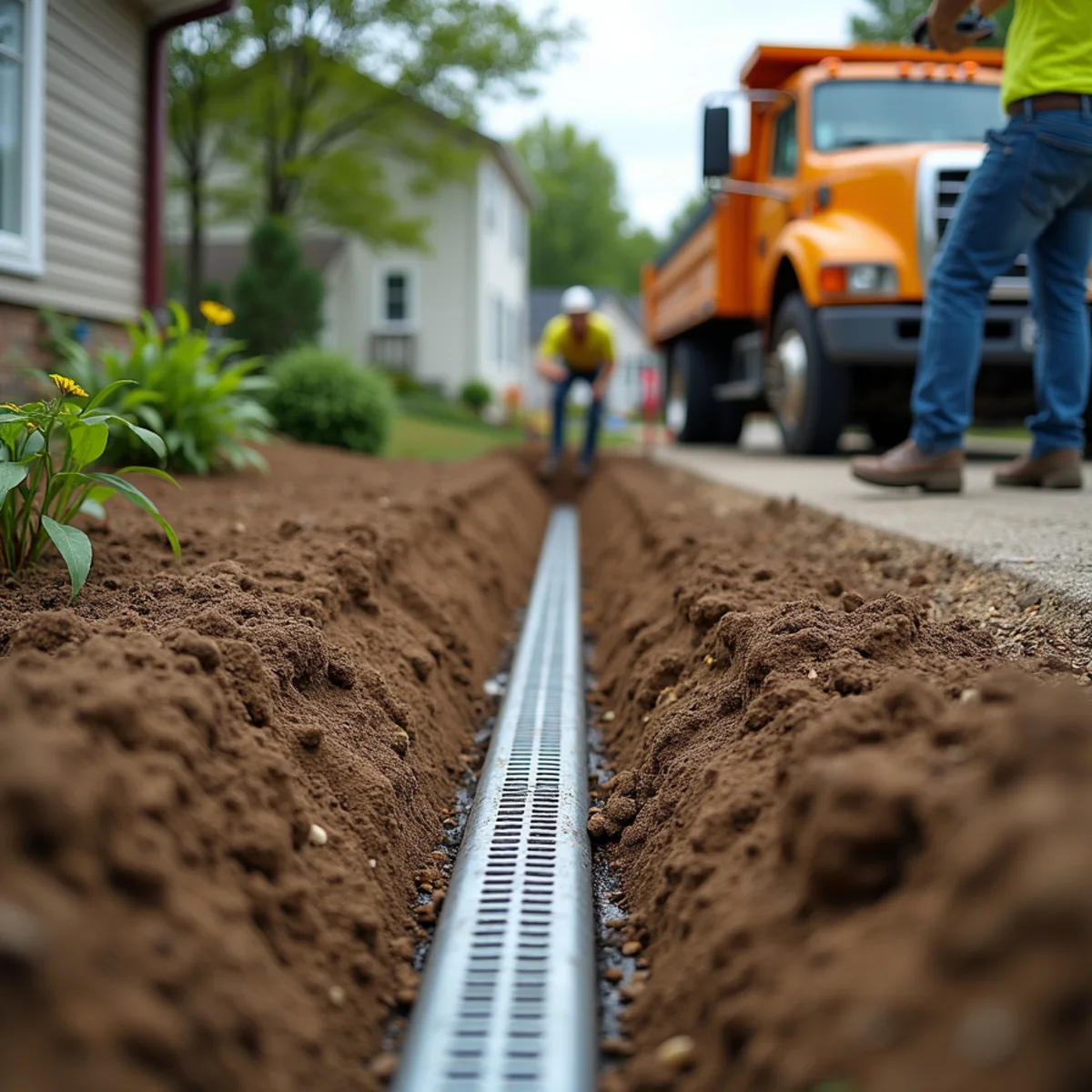
Where the ground itself stays saturated, from groundwater, slope, or a persistent wet area, a french drain is the answer. It is a perforated pipe laid in a trench of clean, washed gravel and wrapped in filter fabric. Water in the surrounding soil moves into the gravel, drops into the pipe, and flows to a lower outlet where it can safely discharge. Done right, it quietly dries out an area that has been wet for years.
The details are everything in clay. Our french drain and downspout solutions use the correct washed stone and filter fabric so the drain does not silt up, and we set the pipe on a real slope so water actually moves. Skip the fabric or use the wrong gravel, and a french drain clogs with clay fines within a couple of seasons, which is why so many DIY drains quit working.
What separates a lasting french drain
- Washed, angular gravel, not dirty fill, so water moves freely through the trench.
- Filter fabric wrapping the stone to keep clay fines out of the system.
- A continuous slope to a real outlet that daylights or ties into positive drainage.
- An outlet placed where the water genuinely leaves, not just relocated to another low spot.
Grading and the whole-yard picture
Sometimes the real issue is grade, the yard slopes toward the house or toward the wet spot. In those cases regrading and shaping shallow swales to guide surface water is part of the solution. The best results usually come from combining approaches: burying the downspouts, adding a french drain where the ground stays wet, and correcting grade so surface water heads the right direction. When a drainage problem turns into standing water against the house, it becomes an emergency drainage situation, and we prioritize getting water away from the foundation first.
Where the water goes matters as much as how you collect it
The part of a drainage project people overlook is the outlet, where the water actually ends up. A french drain or buried downspout is only as good as its discharge point. Send that water to another low spot, to the base of a slope where it will pool, or across the property line onto a neighbor, and you have moved the problem rather than solved it. On lots with enough fall, we daylight the pipe to a spot where water can spread and soak away harmlessly. On flatter lots, that may mean a pop-up emitter, a dry well sized for the volume, or tying into an appropriate storm outlet. Planning the outlet first, then working backward, is what makes a drainage system genuinely fix the yard instead of relocating the mud.
It is a local problem with local solutions
We see these soggy-lawn issues constantly across Fairfield, Monroe, and the surrounding communities, because they all share the same clay soil. There is no single fix that works on every lot; the right combination depends on where your water comes from and where it can safely go, which is why we assess the whole yard before recommending anything.
What we check before we dig a single trench
Before recommending any drain, we trace where the water actually comes from and where it can legally and physically go. That means walking the lot during or just after a rain when we can, checking downspout discharge, reading the grade with a level rather than by eye, and finding a viable outlet. A french drain with nowhere to daylight is just a buried trench that fills and sits, which is why the outlet is the first thing we solve, not the last.
Once the water has a path, the lawn itself can recover. A spot that has been wet for years is usually compacted and thin, so after the drainage is in we often follow with aeration and overseeding as part of ongoing lawn and turf care to rebuild the grass the standing water killed. Drainage first, turf second, in that order.
Signs your yard needs drainage, not just seed
- A spot that stays squishy for days after rain.
- Moss or algae growing where grass should be.
- Mower ruts sinking into soft ground.
- Reseeding that never takes in the same low area.
Get your yard assessed
You do not have to live with a muddy lawn. If part of your yard stays wet, floods, or grows more moss than grass, call Galan's Landscaping at (323) 606-0255. We will walk the property, find where the water is coming from, and design a drainage solution, downspout burial, french drain, regrading, or a combination, that finally dries it out for good.
Frequently Asked Questions
No. Grass cannot survive standing water, so seed will not take until the drainage is solved. Fix where the water goes first with downspout burial or a french drain, then the lawn recovers.