Managing Grubs and Lawn Pests in Butler County: Preventing Summer Turf Browning
You watered all summer, you mowed on schedule, and yet by late summer parts of your lawn are turning brown and dying. Before you blame drought, get down and pull on the brown grass. If it lifts up like a loose piece of carpet, with no roots holding it down, you almost certainly have grubs. It is one of the most common and most destructive lawn problems we see across Butler County, and timing is everything in fighting it.
What grubs are and why they wreck lawns
Grubs are the larval stage of beetles, most commonly Japanese beetles and masked chafers in our area. The adults lay eggs in the soil in mid-summer, and the grubs that hatch feed on grass roots through late summer and fall. Because they eat the roots, the grass loses its anchor and its ability to take up water, which is why grub-damaged turf browns even when it is watered and peels back so easily.
- Irregular brown patches that appear in late summer and expand.
- Turf that pulls up like carpet because the roots have been eaten.
- Spongy feeling underfoot from the tunneling.
- Secondary damage from skunks, raccoons, and birds digging up the lawn to eat the grubs.
Prevention beats cure
The single most important thing to understand about grubs is that prevention is dramatically more effective than trying to kill an established infestation. Preventive treatments are timed to be in the soil when the eggs hatch, stopping the young grubs before they can do damage. By the time you see brown patches, the grubs are large, the roots are gone, and control is much harder. For lawns with a history of grubs, or in neighborhoods where beetles are heavy, a properly timed preventive program is the smart play.
A note on pesticide application
Applying the products that control grubs commercially is a licensed activity in Ohio, regulated by the Ohio Department of Agriculture, and timing and rate matter for both effectiveness and safety. This is not a case where more is better or where guessing works. A knowledgeable approach targets the right window with the right product, which protects your lawn, your family, pets, and pollinators.
Healthy turf is your best defense
A thick, deep-rooted, well-maintained lawn tolerates grub pressure far better than a thin, stressed one. Beetles also prefer to lay eggs in certain conditions, and strong turf recovers from minor feeding that would devastate a weak lawn. This is where routine care pays off. Consistent lawn mowing and turf care, proper mowing height, and good soil health build the kind of resilient lawn that shrugs off pressure a neglected lawn cannot.
When the damage is already done
If grubs got ahead of you and left dead patches, the lawn needs more than treatment, it needs restoration. Killing the remaining grubs stops further damage, but the dead areas will not come back on their own. Depending on the extent, we reseed or install fresh turf to repair the damage. For larger failures, sod installation and turf replacement restores an instant, established lawn rather than waiting months for seed to fill in.
Other lawn pests to watch for
Grubs get the most attention, but they are not the only pest that browns a Southwest Ohio lawn. Surface-feeding insects like sod webworms and chinch bugs also cause irregular brown patches, especially in hot, dry stretches, and they are easy to mistake for drought or grub damage. The distinction matters because the treatment and timing differ. Sod webworm damage often shows as ragged, chewed grass blades and small brown patches, while chinch bugs thrive in sunny, dry areas and their damage spreads outward. Getting the diagnosis right is half the battle, and it is why pulling on the turf, checking the roots, and looking closely at the crowns beats reaching for a product blindly. A stressed lawn is a magnet for all of these, which loops back to the same lesson: healthy, well-watered, properly mowed turf is the foundation of pest resistance.
A local, seasonal problem
Grub pressure varies by neighborhood and by year, and communities from Hamilton to Mason all see it. Because the treatment window is tied to the beetle life cycle, working with someone who knows the local timing makes the difference between prevention and cleanup.
Getting the grub treatment window right
The whole game with grubs is timing, and it is tied to the beetle life cycle, not the calendar. Preventive products work when they are already in the soil as the eggs hatch, roughly mid-summer for the Japanese beetles and masked chafers common here. Apply too early and the product breaks down before the grubs arrive; too late and the young grubs are already feeding on roots. Watering the treatment in is what carries it down to where the grubs are.
Curative products for an active infestation are a different tool with a different window, and by the time you see brown patches the damage to the roots is already done. Pairing a properly timed program with a fall cleanup and overseeding, handled through our seasonal cleanup service, both controls the grubs and restarts the turf they thinned.
How to confirm grubs before treating
- Pull a brown patch; grub-damaged turf lifts like loose carpet.
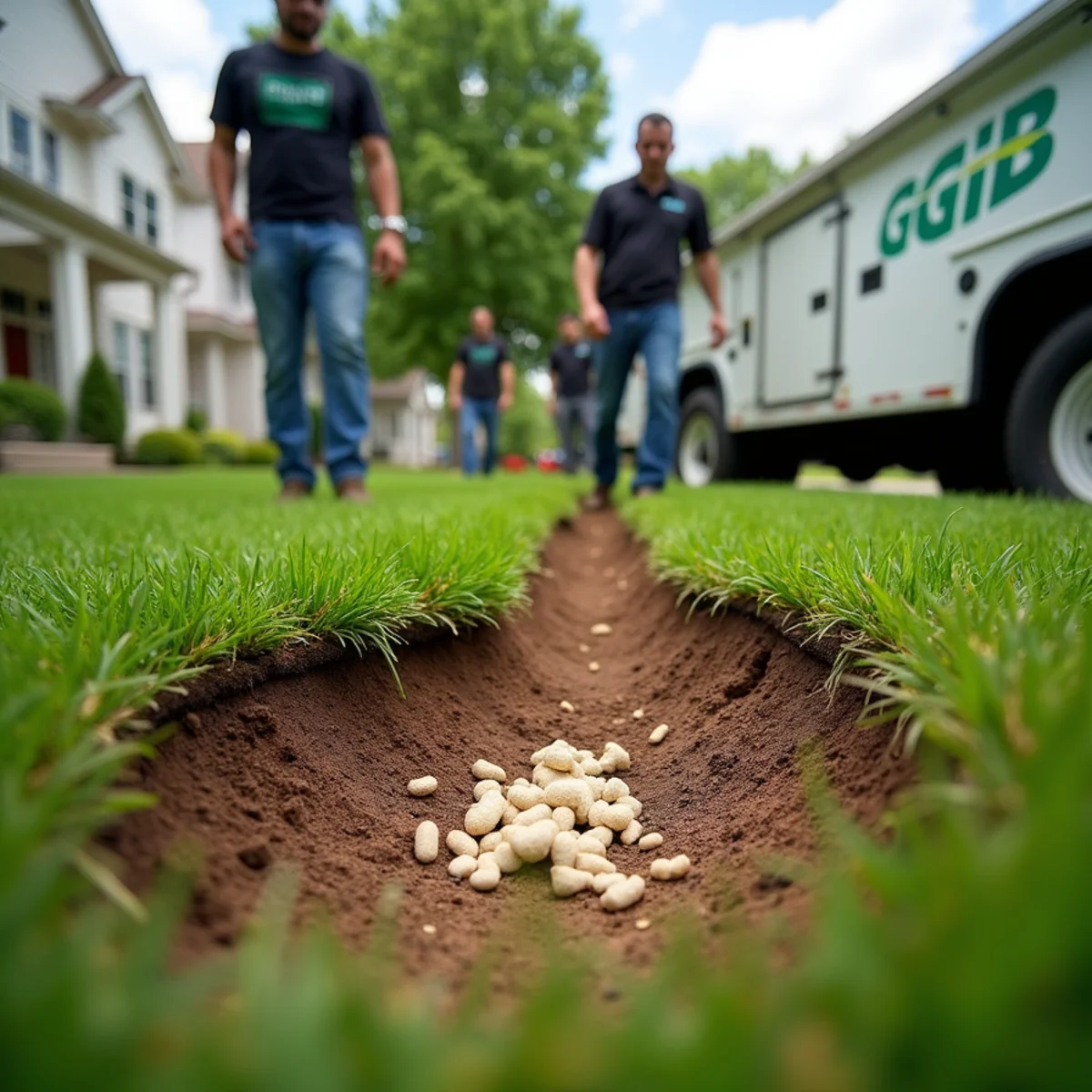
- Cut a square foot of sod and count the white, C-shaped grubs beneath.
- Watch for skunks, raccoons, or birds digging overnight.
- Note whether patches appeared in late summer, the classic grub window.
Protect your lawn before the damage shows
If your lawn browned out last summer, or you have seen beetles and digging animals, do not wait for the patches to return. Call Galan's Landscaping at (323) 606-0255 and we will build a lawn care plan that prevents grubs at the right time, keeps your turf healthy and resilient, and restores any damage that has already been done.
Frequently Asked Questions
Pull on a brown patch. If the turf lifts like loose carpet with no roots, grubs are the cause. Spongy ground and skunks or birds digging up the lawn are other strong signs.