What to Do Immediately When a Severe Ohio Windstorm Drops a Tree or Branch on Your Property
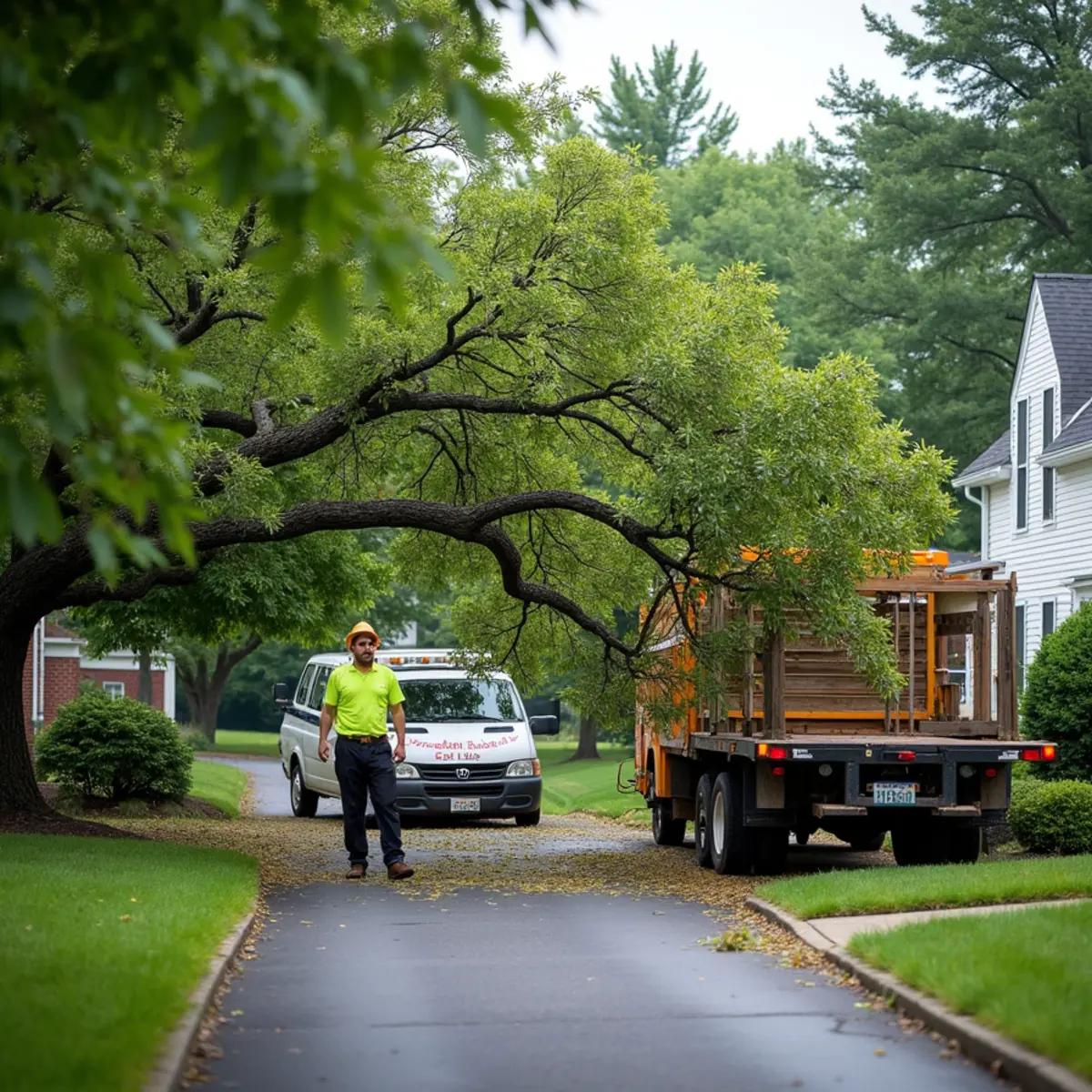
The straight-line winds and summer derechos that roll through the Great Miami River valley can turn a healthy shade tree into a hazard in seconds. When a trunk splits or a heavy limb comes down on your roof, driveway, or fence, the first ten minutes matter more than most people realize. This guide walks you through exactly what our crews tell neighbors to do the moment the wind dies down, so you stay safe and protect what can still be saved.
First, treat every downed tree as a live hazard
The most dangerous mistake we see in Hamilton after a storm is homeowners walking straight up to a fallen tree to assess the damage. A trunk under tension can pivot, roll, or snap without warning, and limbs caught overhead ("widowmakers") drop long after the wind stops. Before you do anything else, back away and account for everyone in the household.
- Look up and look around before stepping near the tree. Broken limbs hung in the canopy can fall at any moment.
- Assume every downed line is energized. Ohio storms routinely drag power lines into branches, and a tree touching a line makes the whole tree electric.
- Keep pets and children indoors until the area is cleared and secured.
Document everything before you touch it
If the tree hit a structure, vehicle, or fence, your homeowners policy will likely be involved. Photograph the scene widely and then up close before any cleanup begins. Capture the point of impact, the full tree, and any interior water intrusion. Time-stamped photos taken before removal make the claims conversation far smoother, and they help our estimators quote accurate emergency storm damage cleanup without a second visit.
What insurers typically want to see
- Wide shots showing the tree in relation to the house or structure.
- Close-ups of roof punctures, broken windows, or crushed fencing.
- Any water entering the home, plus the date and time.
Make the area safe, not perfect
Your job in the first hour is containment, not full cleanup. If a limb is blocking your driveway and it is small, light, and clearly not under tension, you can drag it clear. Anything larger than what one person can comfortably move, anything overhead, and anything touching a structure should wait for a crew with the right rigging. Chainsaw injuries spike after every major Ohio storm precisely because tired, stressed homeowners cut into limbs that are loaded with stored energy.
When a large trunk or a heavy limb has landed on your home, garage, or a vehicle, that is the moment to call for professional emergency tree and branch removal. Crews across Butler County stay busy for days after a derecho, so getting on the schedule early matters.
Protect the interior if the roof is breached
A punctured roof lets water into your attic and ceilings within minutes, and Ohio storms rarely bring just one wave of rain. If it is safe to do so from inside, move furniture and electronics away from the damaged area and place buckets under active drips. Do not climb onto a wet, storm-damaged roof to tarp it yourself. Our crews carry tarps and can secure an opening as part of the removal so the second and third rounds of rain do not multiply the damage.
Why professional removal matters in our clay soil
Southwest Ohio's heavy clay holds water, and saturated ground is why so many trees uproot entirely instead of snapping. A fully uprooted tree brings a root plate that can heave, shift, and drop back into the hole during removal. Proper removal accounts for that stored energy, protects underground utilities, and grinds or hauls the debris so your yard is usable again. Trying to save a few dollars with a rushed cut often costs far more in property damage or an ER visit.
- Trunks on structures need controlled cutting and often a crane or winch, not a ladder and a homeowner saw.
- Uprooted root plates can spring back violently once weight is removed.
- Underground gas, water, and electric lines run through many Hamilton yards near mature trees.
Check on the whole property, not just the obvious damage
Once the immediate hazard is contained, walk the rest of the lot in daylight. Storms that drop one tree often crack limbs on others, and a partly split branch can hang for days before it finally lets go over a walkway or play area. Look at the base of your remaining mature trees for fresh soil heaving or a new lean, both signs the roots loosened in the saturated ground. Check fences, gutters, and outbuildings too, since flying debris and glancing limb strikes do quiet damage that is easy to miss when your attention is on the tree across the driveway. Noting all of it now means a single crew visit can handle the whole cleanup rather than a series of return trips.
What our crew sizes up before the first cut
Before a saw ever touches a storm-felled tree, our crew reads how the wood is loaded. A trunk pinning your roof is under compression on top and tension underneath, and cutting the wrong side first is exactly how a limb kicks back or a log rolls. We identify the hinge points, the lean, and where the stored energy will release, then plan a cut sequence that lets each section come down predictably instead of springing loose.
We also weigh whether the job needs a crane or can be hand-cut and lowered. A crane costs more, but on a tree resting across a house it is often cheaper than the repair one bad drop would cause. That honest tradeoff, and locating buried utilities before we cut, is why we ask homeowners to leave heavy limbs and any urgent yard debris and hazard removal to a crew rather than a borrowed chainsaw.
A quick post-storm safety checklist
- Confirm everyone is accounted for and stay clear of any line touching the tree.
- Photograph the scene widely, then up close, before moving anything.
- Shut off power to the affected area if a limb has torn the service mast.
- Note new leans or heaved soil on nearby trees before you call for help.
Call Galan's Landscaping when the wind stops
We are a local family-run crew, and storm response is one of the busiest things we do. If a tree or heavy limb is down on your property anywhere in Hamilton or the surrounding Butler County communities, get everyone to safety, snap your photos, and then call us at (323) 606-0255. We will walk you through securing the scene and get a crew out to handle the removal safely.
Frequently Asked Questions
Only if it is small, on the ground, clearly not under tension, and not touching any line or structure. Large trunks, overhead limbs, and anything on your house need a professional crew because loaded wood can move violently when cut.