Wood Privacy Fencing in Ohio: Pressure-Treated Pine vs. Western Red Cedar Longevity
A privacy fence is one of the most satisfying upgrades you can make to a yard, it defines your space, keeps kids and pets safe, and turns a backyard into a retreat. Once you decide to build one, the first real question is material. For wood fencing in Ohio, the choice almost always comes down to pressure-treated pine versus Western red cedar. Both are good options, but they age very differently in our freeze-thaw, humid-summer climate.
Pressure-treated pine: the value choice
Pressure-treated pine is the most common fence material in our area, and for good reason, it is the most affordable, and the chemical treatment makes it resistant to rot and insects. For a homeowner who wants privacy on a budget and does not mind some maintenance, it is a solid, practical pick.
- Pros: lowest upfront cost, treated to resist rot and insects, widely available, strong.
- Cons: tends to warp, twist, and check (crack) as it dries, especially in our humidity-and-freeze swings; needs sealing to look its best; the green treated tone weathers to gray.
The biggest thing to understand about pine is that it is often installed wet from the treatment process. As it dries in Ohio's sun and cold, boards can cup and twist if they are not quality lumber installed correctly. Good installation, straight boards, proper fastening, and gaps that allow movement, makes a real difference in how a pine fence holds its shape.
Western red cedar: the premium choice
Cedar is the step up in both looks and stability. It contains natural oils that resist rot and insects without chemical treatment, and it is dimensionally stable, meaning it resists the warping and twisting that plague pine. It also simply looks better, with a rich color and fine grain, and it can be left to weather to a handsome silver-gray or sealed to hold its warm tone.
- Pros: naturally rot and insect resistant, far more stable (less warping and twisting), beautiful grain and color, ages gracefully.
- Cons: higher upfront cost, softer wood that dents more easily, still benefits from occasional sealing to maximize lifespan.
How each holds up to Ohio weather
Our climate is hard on any wood fence. Humid summers encourage rot at ground contact, and freeze-thaw cycles work on any moisture in the wood. Cedar's natural oils and stability give it an edge in weathering, while pine relies on its chemical treatment and needs more attention to sealing. Whichever you choose, the parts that touch the ground and hold the posts are what determine the fence's real lifespan.
The posts matter more than the pickets
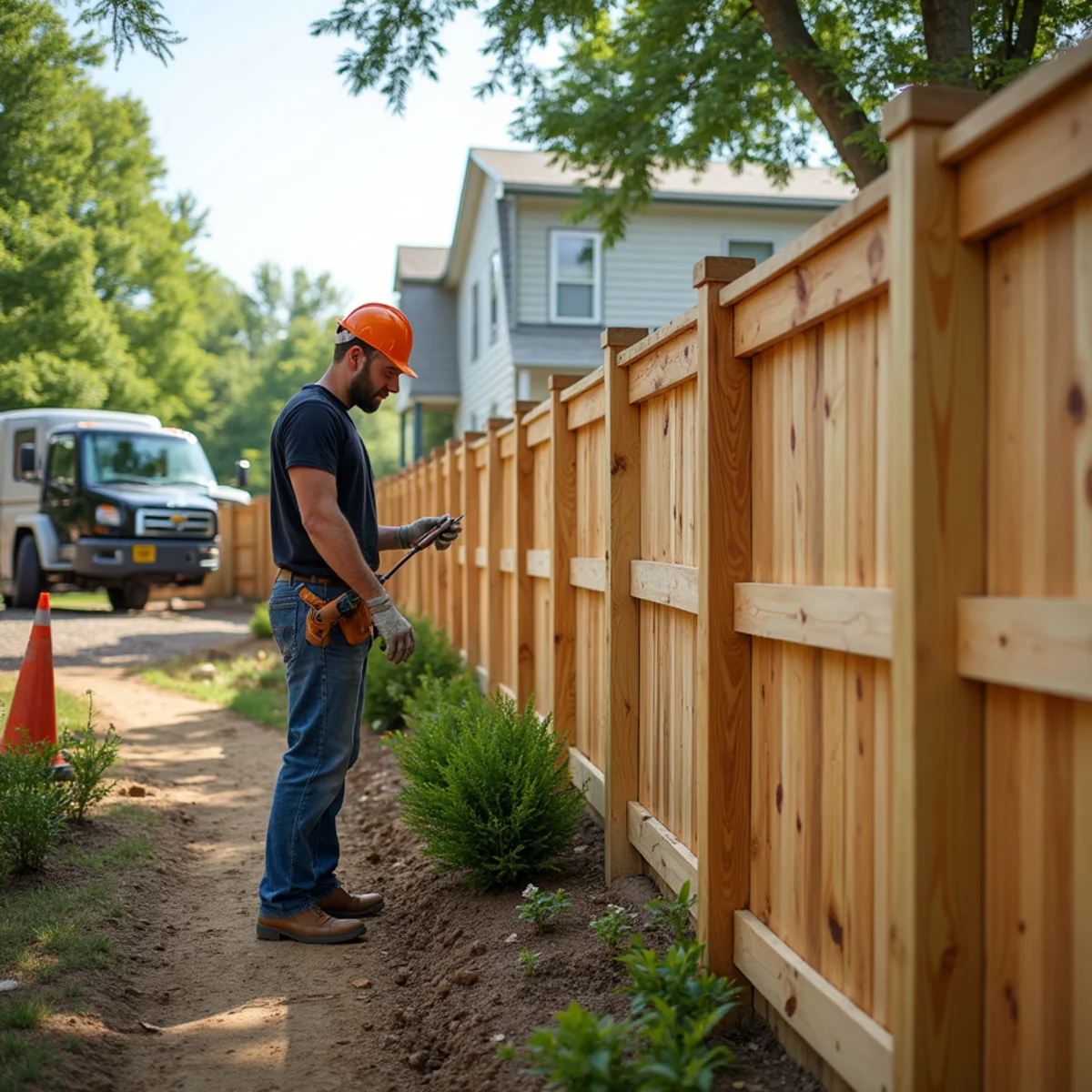
A fence fails at the posts, not the boards. Setting posts below the frost line in properly placed concrete keeps them from heaving out of the ground each winter, our clay heaves dramatically when it freezes. Our wood privacy fence installation focuses on post depth, concrete, and proper spacing, because that is what keeps a fence straight and standing through Ohio winters.
Pairing a fence with the rest of your yard
A privacy fence often goes in alongside other outdoor upgrades. Homeowners frequently combine a new fence with a patio and gathering space, and coordinating the fence with hardscape and fire pit design creates a cohesive, finished backyard rather than a series of disconnected projects. Planning them together also lets us handle grading and layout once.
Style, height, and good-neighbor details
Material is only part of the decision. Board-on-board and shadowbox styles give full privacy while looking finished from both sides, which keeps the peace with neighbors and, in many communities, satisfies HOA rules about the "good side" facing out. Standard privacy height in our area is six feet, though front-yard and corner-lot placement often triggers lower limits, so it is worth confirming local rules and any HOA requirements before building. Gate placement, post caps, and a level or stepped top line on sloped yards all affect how the finished fence looks and functions. Thinking these through up front, rather than mid-build, is what turns a plain privacy barrier into something that genuinely improves the yard. It is also worth locating property lines and calling for utility locates before any post hole is dug.
Maintenance keeps either material going
- Seal or stain every few years to protect the wood and keep its color.
- Keep mulch and soil from piling against the boards, which traps moisture and speeds rot.
- Trim vegetation off the fence so it can dry after rain.
How we set posts to survive Ohio's frost line
A wood fence almost always fails at the posts, so that is where we spend the most care. We dig below the frost line, which in our region means going deep enough that seasonal freezing cannot get under the footing and heave it. Posts are set in properly placed concrete with the hole shaped so it cannot act like a cup that holds water against the wood, and we let the concrete cure before hanging heavy panels.
We also plan for the ground moving, because our clay does. Leaving small gaps for board movement, gravel at the post base for drainage, and a level or cleanly stepped top line on slopes all keep a fence looking straight through years of freeze-thaw. We build fences across West Chester and the surrounding communities to that standard, because a fence set shallow to save time is a fence you reset in a few winters.
Pre-build checklist for a privacy fence
- Locate property lines and confirm setbacks and any HOA rules.
- Call for utility locates before digging any post hole.
- Choose board-on-board or shadowbox for a finished look on both sides.
- Confirm gate placement and height limits for corner or front-yard runs.
Build the fence right the first time
Whether you choose the value of pressure-treated pine or the beauty and longevity of cedar, the installation is what determines how long your fence lasts and how good it looks. We build privacy fences throughout Hamilton, Fairfield, and the surrounding communities with posts set to survive our freeze-thaw ground. Call Galan's Landscaping at (323) 606-0255 to talk through materials and get a quote for your yard.
Frequently Asked Questions
Pine is the budget choice and resists rot through chemical treatment but tends to warp. Cedar costs more but is naturally rot-resistant, far more stable, and better looking. Both work; the right pick depends on budget and maintenance appetite.